
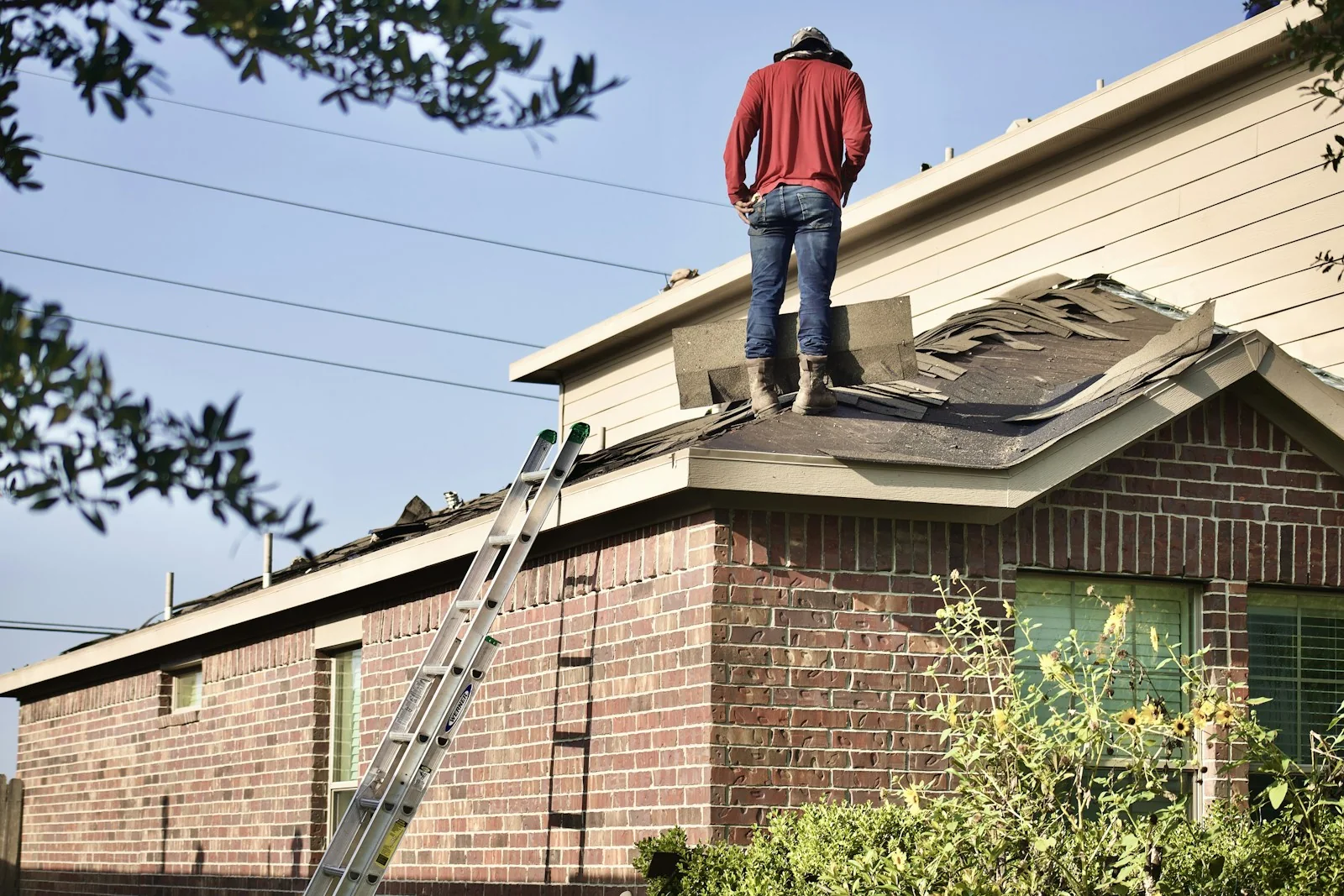
Keep clear of electrical and structural hazards
Avoid any area where water contacts ceiling lights, outlets, exposed wiring or electrical equipment. A bulging or sagging ceiling may hold water and should not be approached or pierced as an improvised fix. Keep children and pets away and contact appropriate emergency professionals or utilities where required. The National Weather Service warns that power lines, falling debris and damaged structures can remain dangerous after thunderstorms.
For an active roof leak, this distinction affects more than the headline price or promise. Before authorizing work, ask who will verify the condition, what evidence would support a different conclusion, and how that uncertainty will be shown in the written scope. A detailed answer should identify the responsible roof component, the limit of the evaluation and the follow-up procedure if the first explanation proves incomplete. Avoid treating an unverified claim as a guarantee of performance, insurance reimbursement or contractor certification.
Protect belongings only where it is safe
If the room is otherwise safe, move furniture and electronics out of the drip path and use a container to catch minor water entry. Take photographs before cleanup when possible. Do not enter an attic with exposed wet wiring or uncertain structural safety. Avoid roof ladders in wind, rain, lightning or icy conditions. Saving drywall is not worth risking injury.
For an active roof leak, this distinction affects more than the headline price or promise. Before authorizing work, ask who will verify the condition, what evidence would support a different conclusion, and how that uncertainty will be shown in the written scope. A detailed answer should identify the responsible roof component, the limit of the evaluation and the follow-up procedure if the first explanation proves incomplete. Avoid treating an unverified claim as a guarantee of performance, insurance reimbursement or contractor certification.
Tell the roofer what the leak is doing
Give the full address, number of stories, roof covering if known, interior leak location and whether water is still entering. Describe recent weather, fallen branches, earlier repairs, skylights and chimney locations. Ask whether the company can actually respond, the cost of emergency mobilization and whether the first visit is temporary stabilization or a permanent repair. A web claim about availability is not a guarantee of an arrival time.
For an active roof leak, this distinction affects more than the headline price or promise. Before authorizing work, ask who will verify the condition, what evidence would support a different conclusion, and how that uncertainty will be shown in the written scope. A detailed answer should identify the responsible roof component, the limit of the evaluation and the follow-up procedure if the first explanation proves incomplete. Avoid treating an unverified claim as a guarantee of performance, insurance reimbursement or contractor certification.
Temporary tarping is not the final diagnosis
A professional tarp or weather barrier may protect an exposed area until conditions are safe. Ask which roof section it covers, how it is fastened and what problems might remain unresolved. Keep an invoice that separates temporary mitigation from permanent repairs. A tarp can be damaged or displaced and should not become an indefinite substitute for a proper inspection and repair plan.
For an active roof leak, this distinction affects more than the headline price or promise. Before authorizing work, ask who will verify the condition, what evidence would support a different conclusion, and how that uncertainty will be shown in the written scope. A detailed answer should identify the responsible roof component, the limit of the evaluation and the follow-up procedure if the first explanation proves incomplete. Avoid treating an unverified claim as a guarantee of performance, insurance reimbursement or contractor certification.
Document the weather and visible symptom
Record when moisture appeared, whether the event involved wind-driven rain or snowmelt and whether an older stain changed. Photograph interior damage from safe ground-level positions, and note changes after the storm. Water can run under shingles from a flashing junction and appear some distance from the entry point. Keep repair receipts and contractor notes for a potential insurer review.
For an active roof leak, this distinction affects more than the headline price or promise. Before authorizing work, ask who will verify the condition, what evidence would support a different conclusion, and how that uncertainty will be shown in the written scope. A detailed answer should identify the responsible roof component, the limit of the evaluation and the follow-up procedure if the first explanation proves incomplete. Avoid treating an unverified claim as a guarantee of performance, insurance reimbursement or contractor certification.
Contact the insurer without promising coverage
Connecticut's Insurance Department advises homeowners to report storm losses promptly, document damage safely, make reasonable temporary protective repairs and retain receipts. If possible, allow the insurer an opportunity to inspect before permanent reconstruction. The policy and claim evidence determine coverage; neither a roofer nor an online guide can guarantee approval. Ask about deductible, claim number and what photos or estimates the adjuster needs.
For an active roof leak, this distinction affects more than the headline price or promise. Before authorizing work, ask who will verify the condition, what evidence would support a different conclusion, and how that uncertainty will be shown in the written scope. A detailed answer should identify the responsible roof component, the limit of the evaluation and the follow-up procedure if the first explanation proves incomplete. Avoid treating an unverified claim as a guarantee of performance, insurance reimbursement or contractor certification.
Investigate the root cause in safe weather
After weather improves, a roofer should assess the suspected water pathway, nearby roof coverings, flashing, penetrations, valleys and decking. A leak might arise from a split pipe boot, failed chimney detail or roof-to-wall assembly rather than from shingles directly over the stain. A permanent repair should solve the demonstrated cause. If multiple roof sections are compromised, obtain evidence before accepting replacement.
For an active roof leak, this distinction affects more than the headline price or promise. Before authorizing work, ask who will verify the condition, what evidence would support a different conclusion, and how that uncertainty will be shown in the written scope. A detailed answer should identify the responsible roof component, the limit of the evaluation and the follow-up procedure if the first explanation proves incomplete. Avoid treating an unverified claim as a guarantee of performance, insurance reimbursement or contractor certification.
Read emergency contracts carefully
Emergency work still needs clear scope, identity and payment terms. Connecticut cancellation rights have special rules for bona fide emergencies; do not sign a waiver casually. Request the legal contractor name and HIC information where applicable, a written stabilization scope, fees, and a separate quote for later repair. Ask whether authorizing a tarp commits you to a roof replacement—it should be clear what is being purchased.
For an active roof leak, this distinction affects more than the headline price or promise. Before authorizing work, ask who will verify the condition, what evidence would support a different conclusion, and how that uncertainty will be shown in the written scope. A detailed answer should identify the responsible roof component, the limit of the evaluation and the follow-up procedure if the first explanation proves incomplete. Avoid treating an unverified claim as a guarantee of performance, insurance reimbursement or contractor certification.
Norwalk and Connecticut context
A roofing decision depends on actual property conditions, not the ZIP alone. Norwalk's main residential ZIP codes—06850, 06851, 06853, 06854 and 06855—contain varied roof types, ages and exposure. A waterfront-facing Rowayton roof, a tree-covered Cranbury roof and a complex South Norwalk building may each need different materials and access methods. Neighborhood descriptions are useful for service routing, not proof that a specific home has wind, salt or drainage damage. Use the property's full street address and existing roof details for any quote or scheduling request.
When researching an active roof leak, use this information to prepare questions rather than to infer a diagnosis from a neighborhood, material label or construction year. Ask the company for its current written process, the precise location of proposed repairs and the name of the entity responsible for callbacks. If an issue requires a second trade or municipal approval, record that handoff instead of assuming the roofer's price includes every adjacent problem.
What homeowners should verify
Connecticut residential work covered by the Home Improvement Act generally requires contractor registration and a written agreement with specific content, subject to legal exceptions. Use the state eLicense search to check the actual contracting company; request insurance information and a written description of work, payment terms, key dates and applicable cancellation notices. A brand website is not evidence that a crew holds particular credentials. Roofing Pros has not published verified HIC credentials or completed-project documentation in this release, so customers should check the operating company's information before paying.
When researching an active roof leak, use this information to prepare questions rather than to infer a diagnosis from a neighborhood, material label or construction year. Ask the company for its current written process, the precise location of proposed repairs and the name of the entity responsible for callbacks. If an issue requires a second trade or municipal approval, record that handoff instead of assuming the roofer's price includes every adjacent problem.
How to avoid an unnecessary second project
When a roofer suggests work, ask what physical evidence supports it, which materials will remain untouched and what findings would require a larger scope. Roof systems include flashing, underlayment, decking, ventilation and drainage as well as visible shingles or membrane. A short surface patch may not correct a failed water path. Conversely, a single boot or flashing defect does not automatically justify tearing off all sound roofing. Require written exclusions, approval for hidden damage and clear workmanship terms before the job starts.
When researching an active roof leak, use this information to prepare questions rather than to infer a diagnosis from a neighborhood, material label or construction year. Ask the company for its current written process, the precise location of proposed repairs and the name of the entity responsible for callbacks. If an issue requires a second trade or municipal approval, record that handoff instead of assuming the roofer's price includes every adjacent problem.
Records worth keeping
Save the written estimate and contract, roof product details, registration verification, insurance information, weather-related photographs, payment receipts, permits where applicable and dated completion photos. Include a note of where the first leak or defect was observed and what earlier repairs were attempted. If water returns, this record can help distinguish a workmanship callback from new storm damage or an unrelated roof failure. It also helps homeowners compare future bids and communicate accurately with a manufacturer or insurer.
When researching an active roof leak, use this information to prepare questions rather than to infer a diagnosis from a neighborhood, material label or construction year. Ask the company for its current written process, the precise location of proposed repairs and the name of the entity responsible for callbacks. If an issue requires a second trade or municipal approval, record that handoff instead of assuming the roofer's price includes every adjacent problem.
Illustrative homeowner decision
During a hypothetical November storm in East Norwalk, a household notices water near a dormer. They avoid the wet ceiling and electrical fixtures, move belongings safely, and photograph the area. After the storm, a qualified roofer might install temporary protection and inspect the flashing. The actual cause could be different; the example does not describe Roofing Pros work or promise same-day dispatch.
For a real job, the useful comparison is between the actual diagnosed problem and the proposed remedy or agreement. Ask what is included and what was explicitly excluded. If the roof condition changes after work begins, require photos and an updated scope. The goal is a decision that can be explained and reviewed later—not a sales claim based on a hypothetical example or a general roofing statistic.
Practical checklist
- Avoid water near electricity. Confirm how it appears in the written record and who is responsible if it changes after work begins.
- Stay clear of sagging ceilings. Confirm how it appears in the written record and who is responsible if it changes after work begins.
- Do not climb onto the roof. Confirm how it appears in the written record and who is responsible if it changes after work begins.
- Record weather and leak timing. Confirm how it appears in the written record and who is responsible if it changes after work begins.
- Take safe photographs. Confirm how it appears in the written record and who is responsible if it changes after work begins.
- Confirm current contractor availability. Confirm how it appears in the written record and who is responsible if it changes after work begins.
- Separate temporary and permanent work. Confirm how it appears in the written record and who is responsible if it changes after work begins.
- Keep mitigation invoices. Confirm how it appears in the written record and who is responsible if it changes after work begins.
- Contact insurer if appropriate. Confirm how it appears in the written record and who is responsible if it changes after work begins.
- Obtain written diagnosis. Confirm how it appears in the written record and who is responsible if it changes after work begins.
Questions homeowners ask
Should I go into a wet attic?
Avoid any area where water contacts ceiling lights, outlets, exposed wiring or electrical equipment. A bulging or sagging ceiling may hold water and should not be approached or pierced as an improvised fix. Ask which document, photograph or observation would confirm the answer for your particular property. If a roofer, manufacturer or insurer cannot yet know the result, request an explanation of the next safe inspection step and how the finding changes scope or cost.
Can I put on a tarp myself?
If the room is otherwise safe, move furniture and electronics out of the drip path and use a container to catch minor water entry. Take photographs before cleanup when possible. Ask which document, photograph or observation would confirm the answer for your particular property. If a roofer, manufacturer or insurer cannot yet know the result, request an explanation of the next safe inspection step and how the finding changes scope or cost.
What if my ceiling is sagging?
Give the full address, number of stories, roof covering if known, interior leak location and whether water is still entering. Describe recent weather, fallen branches, earlier repairs, skylights and chimney locations. Ask which document, photograph or observation would confirm the answer for your particular property. If a roofer, manufacturer or insurer cannot yet know the result, request an explanation of the next safe inspection step and how the finding changes scope or cost.
Does a tarp permanently repair a leak?
A professional tarp or weather barrier may protect an exposed area until conditions are safe. Ask which roof section it covers, how it is fastened and what problems might remain unresolved. Ask which document, photograph or observation would confirm the answer for your particular property. If a roofer, manufacturer or insurer cannot yet know the result, request an explanation of the next safe inspection step and how the finding changes scope or cost.
Should I call insurance immediately?
Record when moisture appeared, whether the event involved wind-driven rain or snowmelt and whether an older stain changed. Photograph interior damage from safe ground-level positions, and note changes after the storm. Ask which document, photograph or observation would confirm the answer for your particular property. If a roofer, manufacturer or insurer cannot yet know the result, request an explanation of the next safe inspection step and how the finding changes scope or cost.
Can repair wait until after rain?
Connecticut's Insurance Department advises homeowners to report storm losses promptly, document damage safely, make reasonable temporary protective repairs and retain receipts. If possible, allow the insurer an opportunity to inspect before permanent reconstruction. Ask which document, photograph or observation would confirm the answer for your particular property. If a roofer, manufacturer or insurer cannot yet know the result, request an explanation of the next safe inspection step and how the finding changes scope or cost.
Is 24/7 dispatch guaranteed?
After weather improves, a roofer should assess the suspected water pathway, nearby roof coverings, flashing, penetrations, valleys and decking. A leak might arise from a split pipe boot, failed chimney detail or roof-to-wall assembly rather than from shingles directly over the stain. Ask which document, photograph or observation would confirm the answer for your particular property. If a roofer, manufacturer or insurer cannot yet know the result, request an explanation of the next safe inspection step and how the finding changes scope or cost.
What should an emergency invoice include?
Emergency work still needs clear scope, identity and payment terms. Connecticut cancellation rights have special rules for bona fide emergencies; do not sign a waiver casually. Ask which document, photograph or observation would confirm the answer for your particular property. If a roofer, manufacturer or insurer cannot yet know the result, request an explanation of the next safe inspection step and how the finding changes scope or cost.
Next steps and relevant roofing services
If you are evaluating an active roof leak, start with the property evidence and the correct written documents. For the roofing work itself, see emergency roof repair and roof leak repair. The Norwalk location directory explains geography, while the roofing services directory identifies the technical work. These informational resources support but do not replace a qualified inspection.
Call Roofing Pros at (475) 467-2189 to discuss a specific property. Confirm scheduling and the identity of the contracting business; this guide does not establish emergency arrival times, a company warranty, fixed prices or an insurance outcome.
Frequently asked questions
Should I go into a wet attic?
Avoid any area where water contacts ceiling lights, outlets, exposed wiring or electrical equipment. A bulging or sagging ceiling may hold water and should not be approached or pierced as an improvised fix. The decision depends on the actual roof or legal document, so request the relevant evidence and written clarification.
Can I put on a tarp myself?
If the room is otherwise safe, move furniture and electronics out of the drip path and use a container to catch minor water entry. Take photographs before cleanup when possible. The decision depends on the actual roof or legal document, so request the relevant evidence and written clarification.
What if my ceiling is sagging?
Give the full address, number of stories, roof covering if known, interior leak location and whether water is still entering. Describe recent weather, fallen branches, earlier repairs, skylights and chimney locations. The decision depends on the actual roof or legal document, so request the relevant evidence and written clarification.
Does a tarp permanently repair a leak?
A professional tarp or weather barrier may protect an exposed area until conditions are safe. Ask which roof section it covers, how it is fastened and what problems might remain unresolved. The decision depends on the actual roof or legal document, so request the relevant evidence and written clarification.
Should I call insurance immediately?
Record when moisture appeared, whether the event involved wind-driven rain or snowmelt and whether an older stain changed. Photograph interior damage from safe ground-level positions, and note changes after the storm. The decision depends on the actual roof or legal document, so request the relevant evidence and written clarification.
Can repair wait until after rain?
Connecticut's Insurance Department advises homeowners to report storm losses promptly, document damage safely, make reasonable temporary protective repairs and retain receipts. If possible, allow the insurer an opportunity to inspect before permanent reconstruction. The decision depends on the actual roof or legal document, so request the relevant evidence and written clarification.
Sources and editorial evidence
Public consumer, industry and official guidance informs this educational article. It is not a real project, company warranty, legal advice or insurer commitment. Verify current terms directly with the relevant party.