
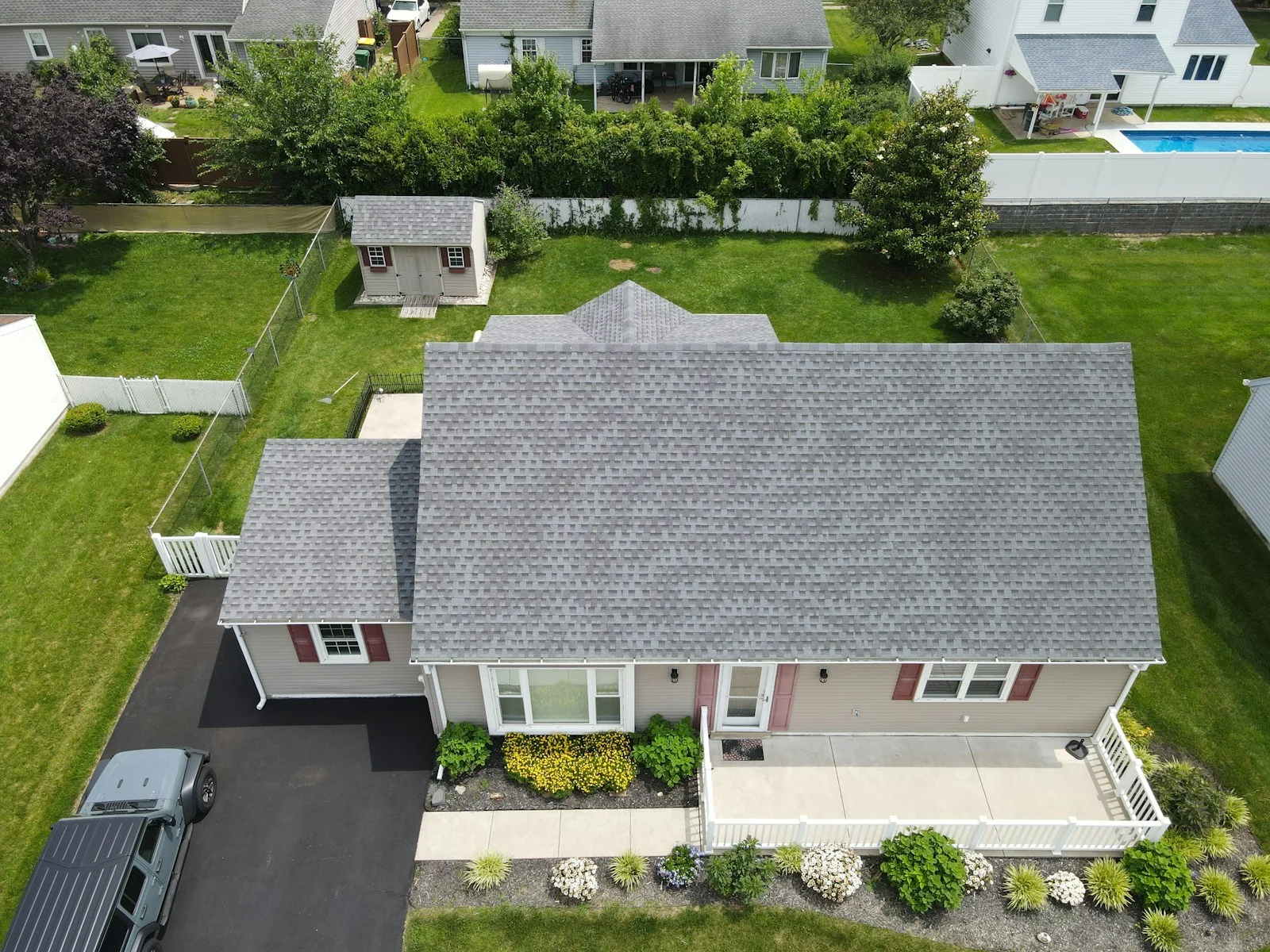
01 / ROOF REPLACEMENT
When roof replacement in Norwalk, CT makes sense
Replacement deserves consideration when damage is widespread, repairs keep returning in different areas, or the existing material no longer supports a dependable localized fix. Age provides context, but it is not a diagnosis. One failed pipe flashing on an otherwise serviceable roof calls for a different conversation from widespread deterioration with repeated moisture entry.
Ask to see the evidence behind the recommendation. Which slopes are affected? Is the problem with the covering, the transitions or the deck below? Can a limited repair reasonably address it, and what uncertainty would remain? A useful proposal makes that comparison understandable. It should also explain whether repairing now could be a sensible bridge to replacement later, or would require paying twice for work that soon needs removal.
02 / ROOF REPLACEMENT
Residential roof replacement: choose a complete assembly
The visible shingles are only one decision. A residential roof replacement also involves the surfaces that support them, the water-control details around interruptions and the way air moves through a vented attic. A material sample cannot tell you whether the chimney flashing or a difficult roof-to-wall transition has been included.
Compare options using the same scope. Ask for the exact covering and accessories, the treatment of low-slope areas, and how a porch or addition connects to the main roof. A different material may change the installation details and maintenance needs. Heavier systems can require a separate assessment of structural capacity. Do not assume a roof suitable for one material automatically supports another.
- Identify the roof covering by product and color, not just by a broad material category.
- State which flashings will be replaced and what must be opened to reach them.
- Keep gutters, skylights and attic improvements visible as included work or separate options.
03 / ROOF REPLACEMENT
Roof tear-off and the decking decision
A roof tear-off creates an opportunity to see conditions hidden below the old covering. That does not mean every sheet of decking must be replaced. The useful question is which areas provide a suitable base for the selected assembly and which require correction. Photographs and a clear explanation help you distinguish necessary substrate work from an undefined allowance.
Before work starts, agree on how concealed conditions will be handled. The proposal can identify a unit or other pricing method, who authorizes added work, and how the affected area will be recorded. If deteriorated framing appears, the next step may extend beyond ordinary sheathing replacement. Keep that possibility separate from routine decking so the project does not quietly change from roofing into structural work.
04 / ROOF REPLACEMENT
Roof replacement cost: what changes the estimate?
Roof replacement cost depends on the actual roof surface and complexity, the selected assembly and the work needed to install it. The floor area printed on a real-estate listing is not a roofing measurement. Steep slopes, several intersecting roof planes, difficult access and multiple existing layers can produce different bids for homes that otherwise seem similar.
The most useful price comparison is a line-by-line scope comparison. Does each proposal include disposal, protection of the property, the same flashing work and the same treatment of concealed damage? Is a lower price based on reusing an item another contractor is replacing? Request the reason for that difference before judging value. A local inspection is more useful than applying an online national average to your house.
- Separate the base roof work from optional upgrades.
- Ask how hidden decking work is priced and approved.
- Confirm the payment schedule, estimated work period and cleanup responsibilities.
05 / ROOF REPLACEMENT
Flashing, low slopes and the places a new roof can still leak
A replacement should address the transitions that allowed water in, rather than leaving an old leak detail beneath new material. Tell us about ceiling stains even if they have dried. Include the weather pattern that caused them and any earlier attempts to repair the area. That history helps focus the planning conversation on a chimney, dormer, valley, skylight or addition.
A roof can contain more than one kind of surface. A low-slope porch may need an assembly different from the steep main roof, with a carefully planned connection between the two. Likewise, wall siding may need limited removal to reach concealed flashing. Ask what access is included and who restores affected finishes. Those small lines in the proposal often matter more than an extra color choice.
06 / ROOF REPLACEMENT
Plan the work around your Norwalk property
Norwalk's neighborhoods create different access questions. A South Norwalk address commonly falls in 06854; Cranbury is commonly associated with 06851. Those ZIP codes help locate a request, but the actual street and property layout determine delivery, debris handling and working space. Mention shared driveways, close neighboring buildings, overhead wires, gardens and any vehicle access you need to maintain.
At the planning stage, decide where materials and a disposal container can go. Identify vulnerable items around the perimeter and move vehicles before the agreed work period. Inside, protect delicate belongings in an accessible attic and discuss rooms where vibration would be disruptive. These are practical preparation decisions, not reasons to assume every house in the same neighborhood needs an identical installation.
07 / ROOF REPLACEMENT
Permits, product instructions and written project documents
Norwalk's Building & Code Enforcement office publishes a specific path for roofing permit applications. Confirm the requirements for your project before scheduling work, and name the person responsible for the application and inspections in the agreement. A roofing project that also changes framing, roof shape or use deserves its own review rather than an assumption based on a simple reroof.
Ask for the installation requirements that apply to the chosen product and for any warranty offered in writing. Product coverage and workmanship coverage are different subjects. Coverage may depend on the assembly, installation and registration requirements. Your written proposal should identify the coverage offered, its exclusions and any registration requirements.
08 / ROOF REPLACEMENT
A replacement schedule you can prepare for
A useful schedule has more detail than a promised start date. It should identify material availability, weather considerations, the planned work sequence and how the building will be protected between stages. Ask whom to contact if access changes or a previously hidden condition is found. Confirm that additional work requires a documented decision rather than a surprise at the end.
At completion, review the agreed scope, remaining punch-list items and relevant product information. Keep photographs, invoices and the contract together with any permit and warranty documents. If a future contractor needs to work on the roof, this record helps explain what was installed. A final walkthrough should leave you knowing which components are new, which were retained and what future maintenance deserves attention.
09 / ROOF REPLACEMENT
Compare the choices before committing
The right residential roof replacement proposal answers the concern that brought you here. If that concern is a single active leak, begin with diagnosis. If several slopes are deteriorated and repeated repairs have stopped making sense, compare a complete replacement with clearly defined alternatives. If you are planning solar panels or a major addition, mention that before the scope is finalized.
Call Roofing Pros at (475) 467-2189 to discuss roof replacement in Norwalk, CT. Share the address, roof material if known, approximate age, visible problems and your preferred project timing. Photos taken safely from the ground and copies of previous repair paperwork are useful. You do not need to know the correct roofing terminology; explain what you have noticed and what decision you need to make.
| Option | When to discuss it | Question to resolve |
|---|---|---|
| Localized repair | An isolated defect on a serviceable roof. | What condition remains outside the repair? |
| Full replacement | Wider deterioration or an unsuitable assembly. | Which components and concealed-work allowances are included? |
| Coordinated project | Roof work alongside skylights, solar or additions. | Who handles each interface and in what sequence? |