
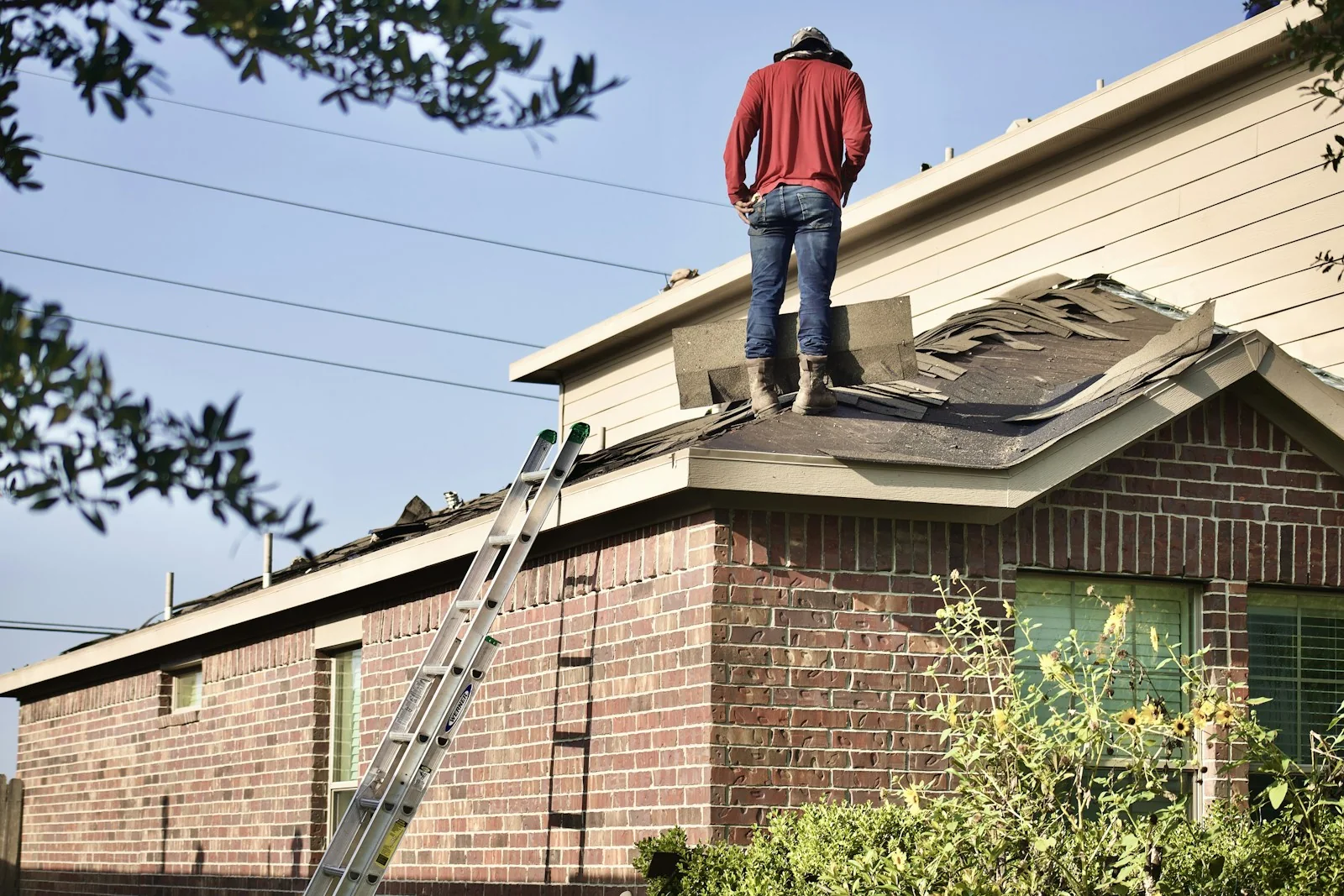
What is a roof nail pop?
A nail pop occurs when a roofing fastener sits high or backs out of the decking. It may push up the overlying shingle into a small tent-like shape. A fastener can also penetrate or remain exposed on the surface. Other defects such as warped shingles and deck joints can resemble nail pops from a distance.
Ask for a photo that identifies which course is affected and how the nail relates to surrounding roof material. A visible bump alone does not prove the actual water entry point.
How one nail can create a leak
Asphalt shingles work through overlapped, water-shedding courses. A raised nail under an upper course can prevent it from sealing flat. Wind-driven rain may reach an unprotected opening. A nail that has pierced the visible shingle surface may also provide a path for moisture.
The size of an indoor stain does not prove the size of the exterior opening. Water can travel under roofing or along framing before dripping through a ceiling. Diagnose the water path before selecting the repair.
Why roof nails back out
Nails may have been left underdriven, installed at the wrong angle or into weakened wood, or moved as decking changes. Old decking with previous fastener holes or moisture damage may lack adequate holding power. Owens Corning and ARMA emphasize correct fastener selection, seating and placement.
Avoid assuming every nail pop is caused by attic ventilation or roof age. A qualified roofer should check whether the head was left proud at installation or backed out later, and why.
High, low, underdriven and overdriven nails
Manufacturers identify precise nailing zones and fastener patterns for each shingle line. A high nail can miss proper attachment layers; a low nail may be exposed to runoff. Underdriven heads can lift upper courses, while overdriven nails can cut through the shingle. ARMA warns that poorly adjusted nail guns can contribute to sealing failures and blowoffs.
Ask the roofer to identify the installed product and whether fastening complies with its current instructions. The repair should not blindly copy a generic nail count or location from another shingle line.
Why deck holding strength matters
A nail needs a sound, suitable substrate. Soft or moisture-damaged sheathing may not hold the fastener, so simply driving it down again can fail. Repeated nail pops in one area should prompt examination of the decking and earlier repair history.
Damaged decking may require replacement after the covering is opened. Photograph the location and obtain a written change order before approving additional work. An isolated nail may not justify replacing an otherwise sound roof.
Popped nails near chimneys, valleys and vents
Runoff can concentrate around penetrations and valleys. One exposed fastener in a high-water area may contribute to repeated leakage, but a cracked pipe boot or failed flashing lap could be the actual cause. The roofer should inspect the complete assembly.
A repair limited to smearing sealant across one nail head is not a reliable response if the underlayment, flashing or shingle overlap also has a problem. The scope should identify all affected details.
What if there are dozens of exposed nails?
Multiple nail pops across different roof planes can point toward a broader workmanship or substrate concern. Compare fastener positions and substrate conditions rather than immediately approve replacement. Some exposed nails may belong to properly detailed components while others may violate shingle placement.
Have the contractor record representative areas and test a defensible explanation. A broad defect deserves a broader inspection, not an invoice claiming every visible nail must be individually caulked.
Norwalk roof conditions and rainfall
Coastal Connecticut can experience wind-driven rain and freeze-thaw weather, making weaknesses at flashing and overlaps apparent. But weather does not prove a nail was originally installed incorrectly. Roof orientation, decking type, age and previous water exposure matter more than the neighborhood name.
In Rowayton or East Norwalk, consider exposed roof faces; in more wooded Cranbury or Silvermine areas, look at concentrated drainage and branches where they exist. These are site questions, not reports of actual local nail defects.
What should a qualified nail repair include?
A roofer should locate the fastener, assess the affected course and water path, deal with the incorrect nail and hole according to manufacturer instructions, and restore sound attachment and overlap. A damaged shingle may need replacement. An unsuitable deck must be addressed before new fastening can reliably work.
Request before-and-after photographs, materials, a clear warranty boundary and the reason the original nail moved. A one-line quote promising to 'seal leak' does not communicate sufficient technical scope.
What if water is entering now?
Keep away from wet electrical fixtures, unstable ceilings and unsafe roof access. If necessary, arrange qualified temporary weather protection. Do not climb onto a wet or steep roof with a hammer or glue.
When calling Roofing Pros at (475) 467-2189, describe the full address, roof age, location of visible nail bumps and whether leakage occurs during wind-driven rain. Confirm availability, contractor credentials and any inspection fee before authorizing work.
popped roofing nail: evidence and next steps
| What you see | What it could mean | Next step |
|---|---|---|
| One raised fastener, otherwise sound roof | Possible localized issue | Professional nail and shingle assessment |
| Visible nail puncture | Direct penetration possible | Restore manufacturer-compliant covering |
| Several popped nails | Deck or fastening problem possible | Review wider roof pattern |
| Repeat nail pop | Possible poor holding strength | Inspect sheathing |
| Leak around a vent | Nail or flashing issue | Trace full assembly |
Frequently asked questions
Can one roofing nail really leak?
Yes, if it creates an exposed penetration or distorts an overlap; it still needs diagnosis.
Should I hammer it back?
No. The surrounding shingle, hole and deck grip may remain defective.
Do popped nails mean bad ventilation?
Not necessarily. Fastener installation and substrate condition are important alternatives.
Does one nail pop mean roof replacement?
Not automatically. A sound roof may allow limited repair.
Can old decking cause nail pops?
Yes. Weak or heavily punctured decking can fail to retain fasteners.
How to establish whether a raised nail is actually the leak source
Ask the inspector to show where the nail sits relative to the exposed shingle face and the course above it. Is the head simply high under an intact shingle, has it punctured the upper course, or is the entire edge lifting? Those are different conditions. Nearby pipe flashing or a failed seal strip may be the real water entry even when the nail is visibly out of place.
Correctly installing a replacement fastener requires a sound substrate and a manufacturer-compliant nailing zone. If the deck cannot hold the new nail, pushing the old one down again is unlikely to be durable. If a puncture remains in the shingle, covering only the metal head may leave the water path unchanged. The repair description should identify how both the opening and the attachment will be restored.
On a newly installed roof, keep the workmanship agreement and photos. Several raised fasteners across courses warrant checking nail-gun setting and deck condition, while one local defect on otherwise serviceable roofing may call for a narrow repair. If the interior ceiling is wet, do not climb onto the roof or attempt the repair yourself.
Original technical sources
Research basis: ARMA, Owens Corning and inspection guidance on nail placement. No field repair at a named Norwalk house is represented.
The difference between a visible nail head and a leak path
A roofing nail intended to be concealed by an upper course does not automatically become a leak simply because a small metal spot is visible. The key questions are whether the fastener penetrates a water-shedding surface, whether an overlap has lifted and whether runoff can reach the opening. Some flashing details use designated exposed fasteners installed with compatible sealing; those should not be confused with incorrectly placed shingle nails.
Ask for a photograph showing the full surrounding detail, including nearby valley, vent or wall flashing. The water path should be explained before replacing shingles or sealing miscellaneous nails.
Why a hole may keep leaking after someone hammers the nail down
If an old nail has punctured the overlying shingle, reducing its height does not necessarily close the hole. If it backed out because the deck is soft, the same substrate may fail to hold it again. A tar patch might conceal the area while leaving a displaced shingle or incompatible repair material. ARMA's nailing bulletin addresses improper seating and repairs using manufacturer-compatible methods.
A lasting scope should deal with the original opening, sound fastening location, affected shingle course and any damaged decking. Ask the roofer to document which components will be removed and restored.
A hypothetical leak near a pipe penetration
Consider a house where a raised fastener is visible next to a pipe boot and a ceiling stain appears nearby after heavy rain. The nail could be responsible, but the rubber boot, flashing overlap and upstream roof courses are alternatives. A contractor should inspect the entire penetration and trace the water path. Replacing the boot alone or caulking the nail alone could miss the true cause.
Ask which observation supports the recommended repair and how the contractor would verify the outcome. This example is not a recorded Roofing Pros job or a guaranteed leak diagnosis.
What a written nail-pop estimate should include
Request the area and number of fasteners inspected, whether the problem appears isolated, the condition of the sheathing, the shingle product and manufacturer guidance, the exact work around holes or lifted courses and cleanup. If decking is suspect, agree how opening, photography and potential replacement will be approved. A short repair can still require careful integration with the surrounding water-shedding assembly.
Ask whether the workmanship coverage applies to just the corrected fastener or a wider roof section. Keep before-and-after images for future repair and warranty discussions.
Why repeated nail pops deserve broader investigation
A single loose nail can have a local explanation. Several fasteners at different slopes may point toward inconsistent nail-gun adjustment, incorrect placement, unsuitable fastener length, old deck holes or movement. A roofer should check a representative sample and note whether the pattern follows installation courses or underlying decking seams. Do not jump from a repeated symptom to a ventilation diagnosis without actual moisture evidence.
If a broad fastening defect is documented, the repair may require more than isolated patches. The contractor should compare feasible correction methods, material age and the condition of adjacent shingles before recommending replacement.
How to prepare for the inspection call
Describe whether the roof is new or old, whether a recent contractor performed work, and whether the same location leaks only in strong rain or after snowmelt. Note how many raised points are visible from the ground, whether they appear near a vent or chimney and whether there was any earlier repair. Keep the signed contract and roofing warranty if applicable.
Do not climb onto the roof to gather more detail. Ask the contractor about an inspection charge, safe access, written findings and the repair scope. A proper diagnosis can rule out a suspected nail and identify a different leak source.
A safe approach when a raised nail appears beside an active drip
If fresh water appears at a ceiling beneath a roof with a visible raised nail, don't assume the nail is the only entry point. Record the rainfall timing, position of nearby chimneys or vents, and whether a previous repair was made. Ask the roofer to inspect the fastener and the surrounding flashing assembly from safe access when weather permits. A raised fastener, failed seal strip and split pipe boot can produce similar indoor symptoms.
Keep the original installation and warranty paperwork available. If the nail was installed recently, ask the responsible contractor for a written callback assessment; if water reaches electrical fixtures or the ceiling looks unstable, prioritize personal safety before waiting for the callback.