
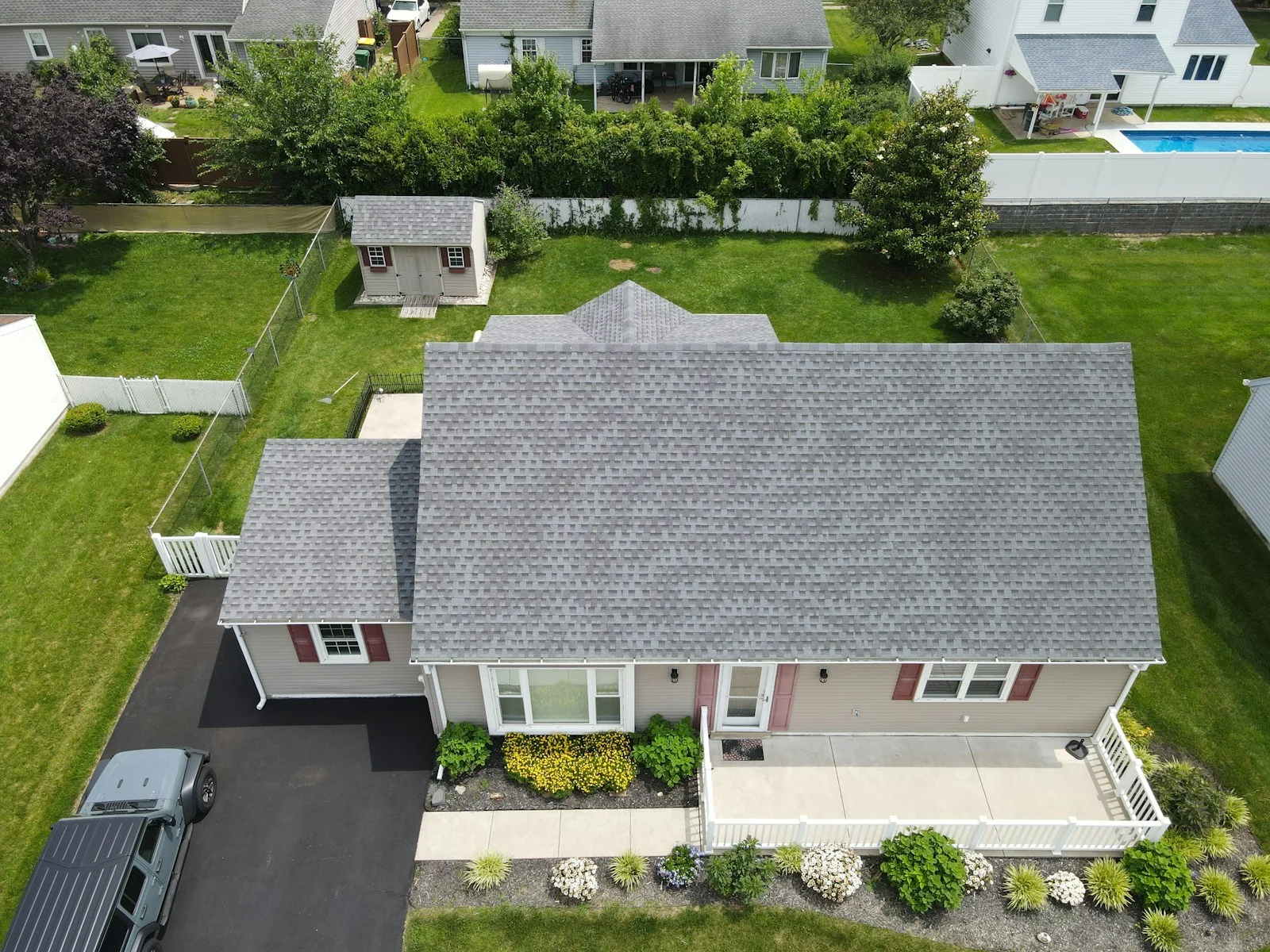
Treat lifespan ranges as planning estimates
Manufacturers and roofing guides publish approximate lifespans, but actual performance varies with product, installation, ventilation, maintenance and exposure. A long limited warranty is not the same as a service-life guarantee. Two roofs installed on the same day may age differently due to slope, shade, wind, construction quality and repeated leaks. When deciding whether to replace, ask the roofer to describe actual observed wear rather than cite only the calendar year.
For remaining roof lifespan, this distinction affects more than the headline price or promise. Before authorizing work, ask who will verify the condition, what evidence would support a different conclusion, and how that uncertainty will be shown in the written scope. A detailed answer should identify the responsible roof component, the limit of the evaluation and the follow-up procedure if the first explanation proves incomplete. Avoid treating an unverified claim as a guarantee of performance, insurance reimbursement or contractor certification.
Asphalt shingles: look for physical failure
Cracking, curled tabs, extensive granule loss, displaced shingles and weakened sealing can be important indicators. A handful of loose granules or roof discoloration does not establish that every shingle has failed. Check whether adjacent shingles can be lifted and repaired without breaking. A roofer should also evaluate underlayment, flashings, nail placement and roof ventilation before blaming the whole covering.
For remaining roof lifespan, this distinction affects more than the headline price or promise. Before authorizing work, ask who will verify the condition, what evidence would support a different conclusion, and how that uncertainty will be shown in the written scope. A detailed answer should identify the responsible roof component, the limit of the evaluation and the follow-up procedure if the first explanation proves incomplete. Avoid treating an unverified claim as a guarantee of performance, insurance reimbursement or contractor certification.
Slate and cedar need material-specific inspection
Natural slate can remain useful for a very long period when individual slates and fasteners are serviceable, but cracked pieces, slipped tiles and defective flashing need skilled handling. Cedar can split, curl or deteriorate in damp conditions, and replacement material matching may be difficult. Do not apply an asphalt-shingle replacement schedule to a historic slate roof. Specialist knowledge can preserve sound roofing while addressing localized defects.
For remaining roof lifespan, this distinction affects more than the headline price or promise. Before authorizing work, ask who will verify the condition, what evidence would support a different conclusion, and how that uncertainty will be shown in the written scope. A detailed answer should identify the responsible roof component, the limit of the evaluation and the follow-up procedure if the first explanation proves incomplete. Avoid treating an unverified claim as a guarantee of performance, insurance reimbursement or contractor certification.
Metal roofs may fail at details rather than panels
Standing-seam roofing and exposed-fastener metal systems have different maintenance and failure patterns. Panel coatings, joint movement, fastener washers, penetrations and galvanic compatibility may matter more than the apparent age of the metal sheet. Ask if a leak can be corrected at one flashing assembly without disturbing serviceable panels. Corrosion risk depends on actual exposure and materials, not simply whether the street is near Long Island Sound.
For remaining roof lifespan, this distinction affects more than the headline price or promise. Before authorizing work, ask who will verify the condition, what evidence would support a different conclusion, and how that uncertainty will be shown in the written scope. A detailed answer should identify the responsible roof component, the limit of the evaluation and the follow-up procedure if the first explanation proves incomplete. Avoid treating an unverified claim as a guarantee of performance, insurance reimbursement or contractor certification.
Flat roofs depend on seams and drainage
EPDM and TPO roofs must be evaluated for seam condition, punctures, terminations, drainage and wet insulation. A small seam defect may be repairable while widespread saturated insulation or failing attachment can require larger work. A low-slope porch addition can have a different remaining life than the house's pitched main roof. Different components do not need replacement on a synchronized timetable.
For remaining roof lifespan, this distinction affects more than the headline price or promise. Before authorizing work, ask who will verify the condition, what evidence would support a different conclusion, and how that uncertainty will be shown in the written scope. A detailed answer should identify the responsible roof component, the limit of the evaluation and the follow-up procedure if the first explanation proves incomplete. Avoid treating an unverified claim as a guarantee of performance, insurance reimbursement or contractor certification.
Connecticut winters reveal different causes
Ice-related leaks can reflect heat escaping into an attic, cold eaves, water barriers or gutters. Wind-driven rain can test wall flashing during a storm even when steady rain does not. Seasonal humidity can produce condensation mistaken for roof entry. These mechanisms require separate inspection questions. Ask whether a proposed repair addresses the underlying water pathway and whether attic ventilation and insulation need review.
For remaining roof lifespan, this distinction affects more than the headline price or promise. Before authorizing work, ask who will verify the condition, what evidence would support a different conclusion, and how that uncertainty will be shown in the written scope. A detailed answer should identify the responsible roof component, the limit of the evaluation and the follow-up procedure if the first explanation proves incomplete. Avoid treating an unverified claim as a guarantee of performance, insurance reimbursement or contractor certification.
Insurance underwriting does not equal roof diagnosis
The Connecticut Insurance Department issued a 2026 advisory explaining that insurers may inspect roof risk using photographs, aerial imagery and physical evaluation. An insurer's underwriting concern is not identical to a determination of exact remaining roof life. Ask what observed evidence justifies a renewal requirement and whether an independent inspection can clarify the actual condition. Keep roof records and communications with your insurer.
For remaining roof lifespan, this distinction affects more than the headline price or promise. Before authorizing work, ask who will verify the condition, what evidence would support a different conclusion, and how that uncertainty will be shown in the written scope. A detailed answer should identify the responsible roof component, the limit of the evaluation and the follow-up procedure if the first explanation proves incomplete. Avoid treating an unverified claim as a guarantee of performance, insurance reimbursement or contractor certification.
When to compare repair with replacement
Localized pipe-boot defects or shingle damage may justify repair even on an older roof if surrounding material is sound. Widespread brittleness, unrelated leaks on several slopes or rotten deck areas can favor replacement. Ask for an evidence-based comparison of the minimum viable repair and the larger system work. Avoid replacing an entire roof solely to avoid examining a specific leak.
For remaining roof lifespan, this distinction affects more than the headline price or promise. Before authorizing work, ask who will verify the condition, what evidence would support a different conclusion, and how that uncertainty will be shown in the written scope. A detailed answer should identify the responsible roof component, the limit of the evaluation and the follow-up procedure if the first explanation proves incomplete. Avoid treating an unverified claim as a guarantee of performance, insurance reimbursement or contractor certification.
Norwalk and Connecticut context
A roofing decision depends on actual property conditions, not the ZIP alone. Norwalk's main residential ZIP codes—06850, 06851, 06853, 06854 and 06855—contain varied roof types, ages and exposure. A waterfront-facing Rowayton roof, a tree-covered Cranbury roof and a complex South Norwalk building may each need different materials and access methods. Neighborhood descriptions are useful for service routing, not proof that a specific home has wind, salt or drainage damage. Use the property's full street address and existing roof details for any quote or scheduling request.
When researching remaining roof lifespan, use this information to prepare questions rather than to infer a diagnosis from a neighborhood, material label or construction year. Ask the company for its current written process, the precise location of proposed repairs and the name of the entity responsible for callbacks. If an issue requires a second trade or municipal approval, record that handoff instead of assuming the roofer's price includes every adjacent problem.
What homeowners should verify
Connecticut residential work covered by the Home Improvement Act generally requires contractor registration and a written agreement with specific content, subject to legal exceptions. Use the state eLicense search to check the actual contracting company; request insurance information and a written description of work, payment terms, key dates and applicable cancellation notices. A brand website is not evidence that a crew holds particular credentials. Roofing Pros has not published verified HIC credentials or completed-project documentation in this release, so customers should check the operating company's information before paying.
When researching remaining roof lifespan, use this information to prepare questions rather than to infer a diagnosis from a neighborhood, material label or construction year. Ask the company for its current written process, the precise location of proposed repairs and the name of the entity responsible for callbacks. If an issue requires a second trade or municipal approval, record that handoff instead of assuming the roofer's price includes every adjacent problem.
How to avoid an unnecessary second project
When a roofer suggests work, ask what physical evidence supports it, which materials will remain untouched and what findings would require a larger scope. Roof systems include flashing, underlayment, decking, ventilation and drainage as well as visible shingles or membrane. A short surface patch may not correct a failed water path. Conversely, a single boot or flashing defect does not automatically justify tearing off all sound roofing. Require written exclusions, approval for hidden damage and clear workmanship terms before the job starts.
When researching remaining roof lifespan, use this information to prepare questions rather than to infer a diagnosis from a neighborhood, material label or construction year. Ask the company for its current written process, the precise location of proposed repairs and the name of the entity responsible for callbacks. If an issue requires a second trade or municipal approval, record that handoff instead of assuming the roofer's price includes every adjacent problem.
Records worth keeping
Save the written estimate and contract, roof product details, registration verification, insurance information, weather-related photographs, payment receipts, permits where applicable and dated completion photos. Include a note of where the first leak or defect was observed and what earlier repairs were attempted. If water returns, this record can help distinguish a workmanship callback from new storm damage or an unrelated roof failure. It also helps homeowners compare future bids and communicate accurately with a manufacturer or insurer.
When researching remaining roof lifespan, use this information to prepare questions rather than to infer a diagnosis from a neighborhood, material label or construction year. Ask the company for its current written process, the precise location of proposed repairs and the name of the entity responsible for callbacks. If an issue requires a second trade or municipal approval, record that handoff instead of assuming the roofer's price includes every adjacent problem.
Illustrative homeowner decision
A 23-year-old asphalt roof in a shaded Cranbury property has a stain near one pipe vent. If the roof field is otherwise sound, a boot replacement may solve the problem. A different 23-year-old roof with brittle shingles on multiple slopes and repeated water entry may need more extensive work. Same age, different condition and decision; this is a hypothetical example.
For a real job, the useful comparison is between the actual diagnosed problem and the proposed remedy or agreement. Ask what is included and what was explicitly excluded. If the roof condition changes after work begins, require photos and an updated scope. The goal is a decision that can be explained and reviewed later—not a sales claim based on a hypothetical example or a general roofing statistic.
Practical checklist
- Installation and repair dates. Confirm how it appears in the written record and who is responsible if it changes after work begins.
- Roof covering material. Confirm how it appears in the written record and who is responsible if it changes after work begins.
- Condition of field material. Confirm how it appears in the written record and who is responsible if it changes after work begins.
- Valleys and penetrations. Confirm how it appears in the written record and who is responsible if it changes after work begins.
- Decking moisture evidence. Confirm how it appears in the written record and who is responsible if it changes after work begins.
- Ventilation and insulation. Confirm how it appears in the written record and who is responsible if it changes after work begins.
- Gutters and tree exposure. Confirm how it appears in the written record and who is responsible if it changes after work begins.
- Storm damage history. Confirm how it appears in the written record and who is responsible if it changes after work begins.
- Insurance concerns. Confirm how it appears in the written record and who is responsible if it changes after work begins.
- Documented repair-versus-replacement options. Confirm how it appears in the written record and who is responsible if it changes after work begins.
Questions homeowners ask
Do 30-year shingles last exactly 30 years?
Manufacturers and roofing guides publish approximate lifespans, but actual performance varies with product, installation, ventilation, maintenance and exposure. A long limited warranty is not the same as a service-life guarantee. Ask which document, photograph or observation would confirm the answer for your particular property. If a roofer, manufacturer or insurer cannot yet know the result, request an explanation of the next safe inspection step and how the finding changes scope or cost.
Is roof discoloration a failure sign?
Cracking, curled tabs, extensive granule loss, displaced shingles and weakened sealing can be important indicators. A handful of loose granules or roof discoloration does not establish that every shingle has failed. Ask which document, photograph or observation would confirm the answer for your particular property. If a roofer, manufacturer or insurer cannot yet know the result, request an explanation of the next safe inspection step and how the finding changes scope or cost.
Can only one roof plane be replaced?
Natural slate can remain useful for a very long period when individual slates and fasteners are serviceable, but cracked pieces, slipped tiles and defective flashing need skilled handling. Cedar can split, curl or deteriorate in damp conditions, and replacement material matching may be difficult. Ask which document, photograph or observation would confirm the answer for your particular property. If a roofer, manufacturer or insurer cannot yet know the result, request an explanation of the next safe inspection step and how the finding changes scope or cost.
Does cedar last longer than asphalt?
Standing-seam roofing and exposed-fastener metal systems have different maintenance and failure patterns. Panel coatings, joint movement, fastener washers, penetrations and galvanic compatibility may matter more than the apparent age of the metal sheet. Ask which document, photograph or observation would confirm the answer for your particular property. If a roofer, manufacturer or insurer cannot yet know the result, request an explanation of the next safe inspection step and how the finding changes scope or cost.
Are metal roofs maintenance-free?
EPDM and TPO roofs must be evaluated for seam condition, punctures, terminations, drainage and wet insulation. A small seam defect may be repairable while widespread saturated insulation or failing attachment can require larger work. Ask which document, photograph or observation would confirm the answer for your particular property. If a roofer, manufacturer or insurer cannot yet know the result, request an explanation of the next safe inspection step and how the finding changes scope or cost.
Does insurance decide a roof is old?
Ice-related leaks can reflect heat escaping into an attic, cold eaves, water barriers or gutters. Wind-driven rain can test wall flashing during a storm even when steady rain does not. Ask which document, photograph or observation would confirm the answer for your particular property. If a roofer, manufacturer or insurer cannot yet know the result, request an explanation of the next safe inspection step and how the finding changes scope or cost.
Can ventilation affect lifespan?
The Connecticut Insurance Department issued a 2026 advisory explaining that insurers may inspect roof risk using photographs, aerial imagery and physical evaluation. An insurer's underwriting concern is not identical to a determination of exact remaining roof life. Ask which document, photograph or observation would confirm the answer for your particular property. If a roofer, manufacturer or insurer cannot yet know the result, request an explanation of the next safe inspection step and how the finding changes scope or cost.
When should I schedule inspection?
Localized pipe-boot defects or shingle damage may justify repair even on an older roof if surrounding material is sound. Widespread brittleness, unrelated leaks on several slopes or rotten deck areas can favor replacement. Ask which document, photograph or observation would confirm the answer for your particular property. If a roofer, manufacturer or insurer cannot yet know the result, request an explanation of the next safe inspection step and how the finding changes scope or cost.
Next steps and relevant roofing services
If you are evaluating remaining roof lifespan, start with the property evidence and the correct written documents. For the roofing work itself, see roof inspection and roof replacement. The Norwalk location directory explains geography, while the roofing services directory identifies the technical work. These informational resources support but do not replace a qualified inspection.
Call Roofing Pros at (475) 467-2189 to discuss a specific property. Confirm scheduling and the identity of the contracting business; this guide does not establish emergency arrival times, a company warranty, fixed prices or an insurance outcome.
Frequently asked questions
Do 30-year shingles last exactly 30 years?
Manufacturers and roofing guides publish approximate lifespans, but actual performance varies with product, installation, ventilation, maintenance and exposure. A long limited warranty is not the same as a service-life guarantee. The decision depends on the actual roof or legal document, so request the relevant evidence and written clarification.
Is roof discoloration a failure sign?
Cracking, curled tabs, extensive granule loss, displaced shingles and weakened sealing can be important indicators. A handful of loose granules or roof discoloration does not establish that every shingle has failed. The decision depends on the actual roof or legal document, so request the relevant evidence and written clarification.
Can only one roof plane be replaced?
Natural slate can remain useful for a very long period when individual slates and fasteners are serviceable, but cracked pieces, slipped tiles and defective flashing need skilled handling. Cedar can split, curl or deteriorate in damp conditions, and replacement material matching may be difficult. The decision depends on the actual roof or legal document, so request the relevant evidence and written clarification.
Does cedar last longer than asphalt?
Standing-seam roofing and exposed-fastener metal systems have different maintenance and failure patterns. Panel coatings, joint movement, fastener washers, penetrations and galvanic compatibility may matter more than the apparent age of the metal sheet. The decision depends on the actual roof or legal document, so request the relevant evidence and written clarification.
Are metal roofs maintenance-free?
EPDM and TPO roofs must be evaluated for seam condition, punctures, terminations, drainage and wet insulation. A small seam defect may be repairable while widespread saturated insulation or failing attachment can require larger work. The decision depends on the actual roof or legal document, so request the relevant evidence and written clarification.
Does insurance decide a roof is old?
Ice-related leaks can reflect heat escaping into an attic, cold eaves, water barriers or gutters. Wind-driven rain can test wall flashing during a storm even when steady rain does not. The decision depends on the actual roof or legal document, so request the relevant evidence and written clarification.
Sources and editorial evidence
Public consumer, industry and official guidance informs this educational article. It is not a real project, company warranty, legal advice or insurer commitment. Verify current terms directly with the relevant party.