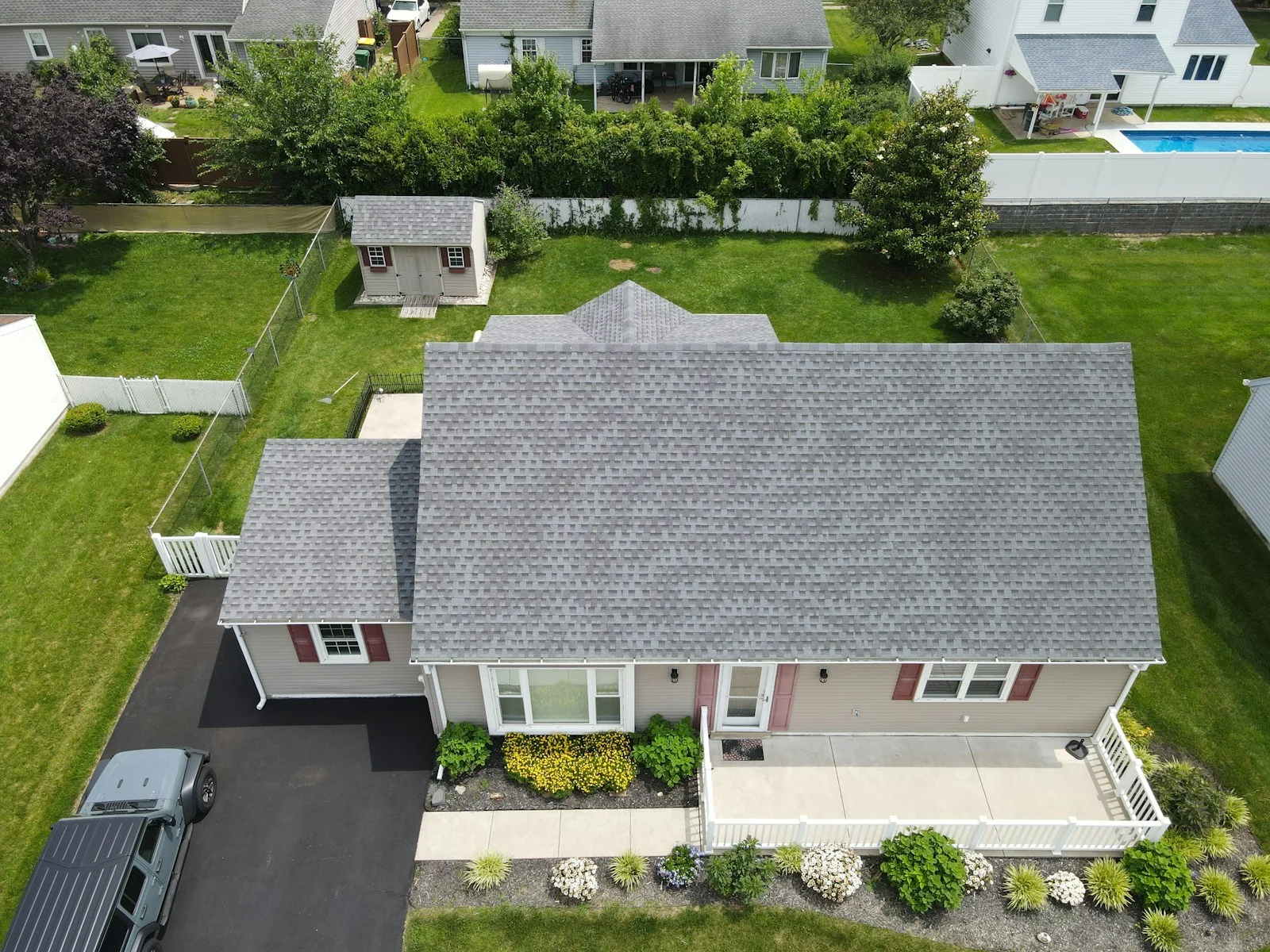
Begin with two actual roof systems, not two labels
The term metal roof can describe standing-seam steel, aluminum panels, exposed-fastener panels or metal shingles. These systems differ in attachment, panel movement, finish, edge details and long-term maintenance. Likewise, asphalt can mean entry-level three-tab, architectural laminated or multi-layered shingles. A price comparison of premium concealed-fastener metal against a basic shingle does not isolate the cost of the material category.
Ask the contractor for the exact manufacturer and profile, metal gauge where relevant, coating or finish, fastener design and compatible snow accessories. For shingles, request product line, installation specifications and complete system components. Verify that either assembly suits the roof pitch and deck. A proposal that only says 'metal roof' or 'architectural shingles' is too vague for a serious decision.
Upfront cost versus whole-life budget
Metal often costs more at installation because fabrication, panel handling and specialty flashing can require more labor and materials. Asphalt can be economical and easier to repair in smaller sections, although replacement may be needed sooner depending on conditions. The right financial question is not merely the installation price; it is total expected spend for the period you plan to own the home, adjusted for likely maintenance, available repairs and the risk of an unexpected replacement.
Use a hypothetical comparison without treating it as a market quote: if metal costs substantially more than shingles, a 10-year owner might not recover the premium, while a long-term owner might value reduced replacement cycles. Actual savings depend on roof size, slope, installation quality and future material prices. Ask for written full-system estimates including tear-off, decking, ventilation and edge details before modeling life-cycle cost.
Durability and repairability are separate advantages
Metal panels can be durable, but penetrations, seams, fasteners, coating damage and roof-to-wall details still need inspection. Exposed-fastener roofs may require periodic attention to fastener washers; standing-seam systems have different movement and attachment considerations. Asphalt shingles can be more straightforward to replace locally when one is wind-damaged, assuming matching product and sound surrounding material. Slate, cedar and other materials are separate options not captured by this comparison.
A small leak on metal is not always a small repair: a concealed seam or panel transition can require specialized work. Conversely, a few missing shingles do not necessarily justify replacing an asphalt roof. Ask about repair methods and the local supply of matching panels or shingles. Preserve records of the installed profile and color so later repairs remain possible.
Snow, ice dams and slippery roof surfaces
On some sloped metal roofs, snow may slide off more readily than on asphalt. That can create hazards for doors, walkways, parked cars and lower roofs. Snow guards may be appropriate after professional design review, but they also change structural loads and panel attachment requirements. A metal roof does not eliminate ice dams if attic heat leakage, insulation or eave conditions remain poorly controlled.
Asphalt systems also require appropriate water barriers and effective attic moisture management. Connecticut winter performance depends on the complete assembly rather than a promise that a smooth metal surface will solve every snow issue. Ask where roof runoff and snow shedding will land on the actual property, especially over entrances and adjoining paths.
Wind-driven rain and coastal-adjacent corrosion
Wind can test both roof types at edges, ridges and penetrations. On metal, panel clips, seams, edge flashing and material compatibility are especially important. On shingles, fastening, starter strips, tabs and ridge caps matter. Near Long Island Sound, exposure to salt spray can be more relevant on some properties than in sheltered inland streets, but it is not proof of corrosion on every East Norwalk or Rowayton home.
Ask whether the chosen metal coating and fasteners are appropriate for the actual exposure, and get written manufacturer guidance on dissimilar-metal contact. For shingles, confirm the specified wind installation details and edge protection. A correct roof system addresses water pathways at every interruption, not just material performance in the middle of a roof plane.
Rain noise, attic temperature and energy efficiency
The claim that every metal roof is noisy in rain ignores the building assembly. Solid decking, underlayment, insulation and the occupied space's ceiling construction can influence perceived sound. An open outbuilding with a bare metal panel is not a useful model for a fully built residential attic. Ask for installed examples on buildings with comparable deck and insulation rather than rely on anecdotes.
Energy performance also depends on roof color, solar reflectance, insulation, air sealing and attic ventilation. A reflective coating can reduce solar heat absorption in certain circumstances, but metal does not guarantee lower utility bills. Some asphalt products also offer reflective options. Request product-specific performance data and consider whether improving attic insulation provides more predictable comfort benefits.
Appearance, neighborhood context and resale
Metal can suit contemporary designs, farm-style roofs or selected historic-inspired details; asphalt shingles offer many colors and profiles common to Norwalk homes. The most suitable appearance depends on the house, not a statement that all nearby roofs use one material. A strongly visible roof change at a historic-designated property may warrant checking applicable review requirements. Keep material samples in natural daylight and consider how fascia, gutters and trim will look after installation.
Resale premiums are uncertain. Buyers may value a recent, documented roof with transferable coverage, but an expensive material does not guarantee the full premium will return in a sale price. If you expect to move soon, compare total project cost and likely buyer expectations without treating online resale percentages as a promise.
Installation, permits and warranty differences
Both options require careful roof-deck assessment, proper underlayment and flashing. Metal may need substrate, fastener, movement or panel-layout details beyond a generic shingle crew's experience. Asphalt shingle installation has its own fastening, ventilation and sealing requirements. Ask each contractor for specific projects using the proposed system and verify its legal Connecticut business identity and registration where required.
Norwalk publishes roofing permit information. Confirm the actual permit for your scope, especially if the project changes structural loads, geometry or exterior details. Compare product finish or material coverage, labor workmanship coverage, exclusions and transfer terms in writing. An advertised '50-year roof' is not a commitment to pay all repair costs for half a century.
Example: a complex house with one low-slope addition
Consider a hypothetical two-story Norwalk home with a steep main roof, a shallow porch section and three dormers. A roofer might propose architectural shingles on the main slopes and a compatible membrane on the porch. Another could propose standing-seam metal on suitable slopes with a separate low-slope solution. Neither plan should use the same material everywhere merely for consistency if the roof pitch or transitions make it unsuitable.
The comparison should identify the junction where materials meet, flashing at the dormers, how runoff is directed and whether the adjacent gutter system needs changes. Installation cost and long-term leakage risk may be driven more by those transitions than by the field panel or shingle price.
A decision checklist for Connecticut homeowners
Ask for two complete proposals, not an asphalt price and a metal material brochure. Each should state tear-off, decking allowance, underlayment, ventilation, roof edge, valleys, chimney or skylight detail, snow management where relevant, cleanup, permit responsibility and labor warranty. The contractor should explain future repair access and how replacement panels or shingles can be sourced.
For most homeowners the sensible answer emerges from total installed price, roof form and time horizon. If the existing roof can be repaired safely, compare that option before choosing either new material. A roof replacement is a significant investment; its scope must be justified by the actual condition, not by a preferred sales product.
Product and project comparison
| Question | Asphalt shingles | Metal roofing / scope | Decision |
|---|---|---|---|
| Initial budget | Often lower for architectural asphalt | Often higher for concealed-fastener metal | |
| Repair logistics | Single shingles may be replaceable | Panel/seam repairs may need specialist | |
| Winter snow movement | Usually less prone to sudden sliding | Can shed snow rapidly; assess snow guards | |
| Sound | Depends on roof assembly | Also depends on solid deck and insulation | |
| Warranties | Shingle product + separate labor terms | Panel finish, product and installation terms vary | |
| Best-fit decision | Value, widespread installer availability | Long horizon and system-specific benefits |
A checklist to use with your written quote
- Exact product and roof profile
- Roof slope and deck compatibility
- Complete installed cost and exclusions
- Flashing and penetration details
- Snow shedding near entrances
- Coastal hardware compatibility if exposed
- Insulation and attic ventilation
- Material sourcing for future repairs
- Permit and contractor verification
- Written manufacturer plus workmanship warranties
Use this checklist with the actual roof inspection and contract, not as a substitute for technical design. A homeowner should know which components the roofer plans to leave untouched and how any hidden defects will be documented before approving extra work.
Frequently asked homeowner questions
Is metal roofing worth the extra money in Connecticut?
It can be for some long-term owners who value its potential service life, particular appearance or other product-specific benefits. The result depends on the premium, roof complexity and quality of installation. Compare realistic long-term costs rather than assume a fixed payback.
Are metal roofs loud in rain?
Perceived noise depends on the roof deck, underlayment, insulation and ceiling assembly. A fully decked home roof can behave very differently from an open shed. Ask for examples of comparable residential installations.
Does a metal roof prevent ice dams?
No. Ice dams can involve attic heat loss and uneven eave temperatures even with metal. Snow sliding can also create separate safety concerns. Review insulation, air sealing and roof-edge details.
Are metal roofs safer in Connecticut storms?
Neither material is stormproof. Proper attachment, flashings, edge details, substrate and weather exposure are critical for both. Check product-specific standards and the installation plan.
Can I install metal over old asphalt shingles?
Some systems may allow particular overlays subject to code, manufacturer instructions and the existing deck, but a blanket 'yes' is unsafe. A tear-off may be necessary to inspect substrate or remove an unsuitable existing layer.
Which material is easier to maintain?
It depends on system and damage type. Asphalt may permit localized shingle replacement; metal can require inspection of seams, movement and fasteners. Neither should be considered maintenance-free.
Sources, methodology and limits
These independent resources support material comparisons and homeowner procedures. Product features and warranty terms depend on the exact current document and installed assembly. Roofing Pros has not provided verified manufacturer certifications, roof case studies or warranty documents in this publication. Photos are illustrative; there is no promise of ranking, installed pricing or emergency arrival.