Black streaks are commonly algae, not proof of mold
ARMA's technical guidance names Gloeocapsa magma as a prevalent contributor to dark asphalt roof discoloration. The organism produces dark pigment that can make lighter shingles appear gray, brown or nearly black. From the ground, the pattern often starts in scattered areas and develops into irregular streaks. The roof may still shed water normally because discoloration does not necessarily imply loss of the fiberglass mat or waterproofing assembly.
Calling all black growth mold is inaccurate. Moss forms distinct green or brown cushions; lichen can create crusty, attached patches; soot and debris may accumulate around vents or runoff channels. A roofer should identify the visible mechanism rather than use the word mold to justify replacement. If the homeowner also notices sagging, leaks or missing granules, those are separate conditions to evaluate.
Why do roof algae stains form on some slopes but not others?
Moisture, shade, roof temperature, airborne particles and local biological conditions influence where discoloration develops. A north-facing slope may dry more slowly than an open south-facing slope, although orientation alone does not prove algae. Roof valleys and areas under tree canopy may hold moisture or debris longer. Shingle materials and algae-resistant granules also affect how visible streaking becomes.
A house in wooded parts of Cranbury or West Norwalk may have different shade patterns from a nearby open property, but this is a question about the actual roof, not a neighborhood-level diagnosis. Record the affected slope and how often it receives sun. Ask whether gutters, overhanging branches or adjacent buildings affect drying. Do not create a fictional local outbreak or claim every waterfront roof has the same staining.
Algae streaks versus missing protective granules
A black line can be biological pigment while a dark bare patch can mean the mineral granules that protect an asphalt shingle have worn away. Those two features should not be treated identically. Ask for close photographs when safe, including areas with little staining for comparison. If the shingle surface retains its protective granular texture and has no cracking, leaks or uplift, discoloration alone is a weak basis for wholesale replacement.
Conversely, a severe-looking stain can conceal weathering that deserves inspection. A roof report should distinguish appearance, material age, mechanical loss, edge condition and penetrations. Granules gathered in gutters do not by themselves establish that algae caused them. Read the separate granule-loss article for indicators of actual weather-facing coating loss.
Why pressure washing asphalt shingles is risky
ARMA warns that high-pressure washing is likely to damage asphalt shingles and should not be used for algae removal. The pressure can dislodge granules, loosen edges or force water beneath overlapping material. Forceful scrubbing similarly risks abrasion. A before-and-after photo can look impressive even when the cleaning has shortened useful service life, so appearance is not a sufficient measure of cleaning success.
Do not climb onto a wet, steep or heavily shaded roof to scrub stains. Algae cleaning often involves chemicals, runoff management and plant protection. A qualified cleaning contractor should follow the exact shingle manufacturer's guidance, use appropriate worker safety practices, protect gutters and landscaping, and disclose whether cleaning could affect existing warranty terms.
What manufacturer-approved cleaning means
ARMA publishes an algae-cleaning technical bulletin with recommendations and cautions. A product manufacturer may have additional written procedures or limitations. Before hiring, identify the shingle make and line if possible. Ask the cleaner to name the treatment, explain whether it is compatible with the shingle, how water will be controlled, and how nearby plants or metal surfaces will be protected.
Never assume that a stronger concentration, repeated soaking or a rented power washer makes the job safer or more effective. The aim is to address biological discoloration while preserving the mineral-granule surface. A cleaner's marketing term 'soft wash' is not itself a guarantee of product compatibility or safe runoff handling; ask what the actual method involves.
Does algae reduce roof lifespan?
Algae often primarily changes appearance, but whether a particular roof also has material deterioration depends on its actual condition. ARMA distinguishes algae discoloration from other defects. Do not promise that the roof will last a fixed additional number of years simply because it has algae. Examine shingle flexibility, cracking, seal adhesion, visible bare spots, flashing and deck moisture where appropriate.
If an inspection shows that the protective granules remain intact and there is no water entry, replacement solely to remove a cosmetic stain may be unnecessary. A homeowner preparing to sell may still consider cosmetic cleaning, but should compare its cost, risk and warranty implications with leaving the discoloration alone. Preserve written evidence rather than rely on a cleaner's guarantee of resale value.
Can dark staining create an insurance problem?
Some insurers assess roof condition using photographs or aerial imagery when underwriting or renewing policies. A dark appearance can prompt questions about age or condition, but pigment is not automatically structural failure or a covered insurance loss. If an insurer asks for roof evaluation, request its written concern and consider a qualified condition report that separates algae from actual deterioration.
An insurance company decides underwriting and claims under its own policy and applicable rules. A cleaning contractor cannot guarantee an insurer will renew coverage or that washing will change a roof's insurability. If the roof also has missing shingles, hail impacts or active leaks, document those separately. Accurate records help more than calling every black mark 'storm damage.'
Why Norwalk properties can have different discoloration patterns
Norwalk lies along Long Island Sound and includes distinct built environments: coastal and harbor-adjacent areas, densely developed streets and wooded neighborhoods. Shade, tree debris, orientation and roof construction differ between homes. An attic ventilation issue may produce interior moisture, but it should not automatically be blamed for surface algae. The roof's exposure and surface observations matter more than the ZIP on a mailing address.
For a South Norwalk building with multiple roof levels, inspect whether runoff from a higher slope concentrates along one lower plane. For an older Silvermine roof, confirm whether the material is asphalt, slate or cedar before choosing a treatment. Surface cleaning methods are not interchangeable across materials. These are illustrative site questions, not claims of completed roofing jobs.
A useful estimate for algae treatment versus roof repair
Ask a contractor to clarify whether the proposal is solely cosmetic cleaning, limited shingle repair or full replacement. A cleaning estimate should explain method, affected areas, protection of nearby plants and whether streaks may return. A roofing repair quote should identify actual failed components and why cleaning cannot address them. These are different services, with different outcomes and warranties.
If the roofer points to dark shingles as the reason for replacement, request photographs showing cracking, exposed asphalt, broken tabs or other physical defects. If those are absent and the covering is otherwise serviceable, discuss monitoring or compatible cleaning. Avoid paying for a reroof simply to erase algae without understanding the technical rationale.
What should a Norwalk homeowner do next?
Take a wide photo showing which roof planes are dark. Note whether the discoloration has changed over time, whether nearby trees shade the roof, and whether water is entering indoors. Do not walk on the roofing, spray chemicals from a ladder, or hire pressure washing without checking the manufacturer. If the roof has both staining and actual damage, prioritize diagnosis of the water pathway.
Call Roofing Pros at (475) 467-2189 to discuss a roof concern and verify actual service availability and contractor credentials. Request a written roof condition assessment when the stain is accompanied by physical defects. If it is purely cosmetic, ask what evidence supports any proposed cleaning method and whether a roof-cleaning specialist is more appropriate.
What the visible symptom may mean
| Observation | Possible mechanism | Responsible next step |
|---|---|---|
| Long dark streaks without material defects | Often algae pigmentation | Confirm material and compatible cleaning |
| Raised green cushion-like growth | May be moss | Avoid scraping; assess manufacturer guidance |
| Black bare patches with granules missing | Possible weathering or abrasion | Inspect protective surface |
| Fresh interior dripping near stained area | Water entry needs separate diagnosis | Trace flashing and roof pathway |
| Streaks only on one shaded roof slope | Exposure may favor biological growth | Check shade, drying and surface condition |
A dark streak is a surface appearance. It does not establish whether the shingles beneath it are intact or whether a separate roof leak is present.
Frequently asked questions
Are black roof streaks mold?
Not necessarily. Gloeocapsa magma algae commonly causes black asphalt-shingle discoloration, and moss or soot can look different. A professional should assess the visible material.
Can I pressure wash the black streaks away?
ARMA advises against high-pressure washing because it can damage the shingle and remove granules. Confirm a manufacturer-compatible treatment instead.
Do algae streaks mean the roof must be replaced?
No. Staining alone is not proof of leaking or structural failure. Inspect material condition and associated defects before considering replacement.
Will algae return after cleaning?
It can return depending on moisture, shade, material and treatment. Avoid any promise that cleaning creates a permanent prevention guarantee.
Why does only one side of my roof have streaks?
Different sun, shade and drying conditions can affect algae appearance. A single affected slope does not by itself identify a roof leak.
Before hiring a roof cleaner, separate three different observations
Color: Are the marks dark downhill streaks, a raised green growth or isolated crusts? ARMA describes black-to-brown discoloration from algae, but moss and other deposits require different evaluation. Shingle surface: Can an inspector still see mineral granules embedded across the face, or are there bare asphalt patches? Water entry: Is there confirmed leakage, or just cosmetic discoloration?
A cleaning estimate should identify the roof material and the method proposed, including what protects landscaping and runoff. A contractor should not use a pressure washer merely because the stained surface looks old. If there is an indoor leak, investigate flashing and roof penetrations rather than treating a dark streak as proof of a leak path. If there is shingle surface loss, read the separate guide to granule wear.
Documenting these three observations can prevent a homeowner from paying for cleaning when a repair is needed—or approving a full roof replacement solely because the color has changed.
Official and technical references
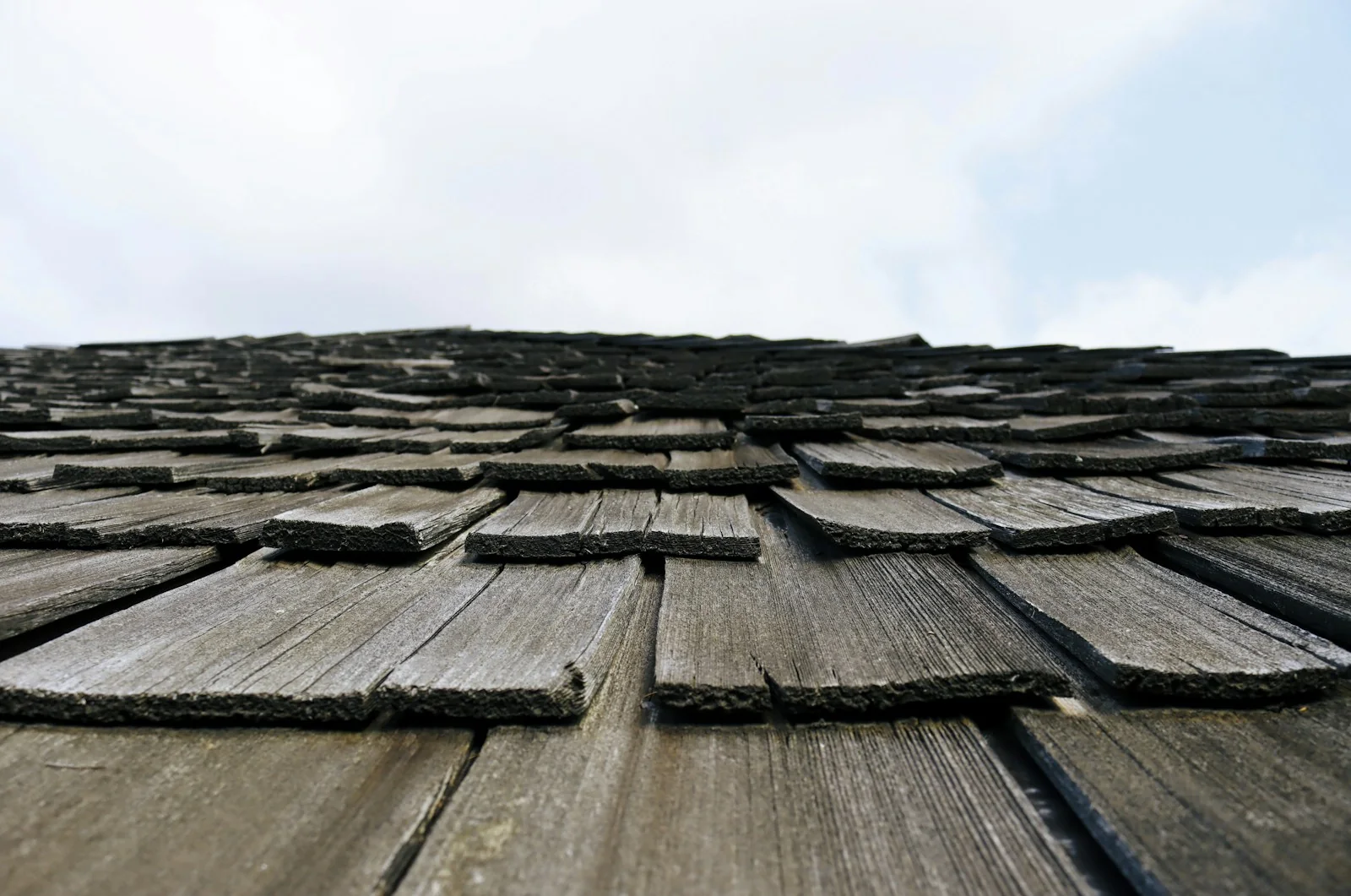
Research basis: ARMA's algae-discoloration and cleaning bulletins. No surface samples or completed cleaning jobs are represented; the photograph is illustrative.
What a cleaning quote should make clear
Ask whether the contractor proposes a roof inspection, cosmetic biological treatment or replacement of deteriorated shingles. A cleaning quote should name the actual method, identify the roof material, explain protection of plants and runoff, and discuss how it avoids loss of granules. It should not promise to restore a fiberglass mat or repair flashing merely by removing discoloration.
If the roof is steep or has slate, cedar or metal sections, methods and risks may differ. Request product-specific guidance rather than a generic cleaning package that treats every roof surface as asphalt.
What to do if the dark marks remain after treatment
Some discoloration can be persistent, and further treatment should not automatically mean stronger pressure or repeated scrubbing. Compare current photographs with earlier images and ask whether the remaining color is staining, bare asphalt, trapped dirt or a different material characteristic. A cleaning provider should acknowledge that appearance and water tightness are separate outcomes.
If leaks or soft decking were present before cleaning, they need their own diagnosis. A dry, algae-streaked roof should not be represented as structurally unsound without physical evidence, while a roof with actual material defects still warrants roofing work regardless of cosmetic cleaning.