
Understand what flashing actually does
Flashing redirects water outward where shingles, tile, metal or membranes meet another building element. It works through material shape, lapped layers and drainage paths. Sealants may supplement specific compatible details but often cannot substitute for missing or incorrectly installed metal.
The first inspection question is which transition has failed. At a chimney, counterflashing and step flashing perform different tasks; at a vent, a boot or welded curb may be involved; at a valley, a continuous waterway must handle concentrated flow.
DOE roof-wall guidance shows why a series of correctly lapped step pieces is a water-shedding assembly, not merely a strip of metal with caulk over the top.
Step flashing at sidewalls
Steep-slope asphalt roofs often use individual step pieces interleaved with shingle courses where the roof meets a wall. Each step should overlap the next so runoff remains outside. A single long strip smeared with roof cement may not replicate that layered design.
An individual piece could be serviceable, but missing steps, backward laps or widespread metal corrosion may require opening the adjoining courses and reconstructing the system. DOE Building Science Education provides water-management guidance for roof-wall intersections.
Counterflashing at masonry chimneys
Step or base flashing commonly rises against the chimney while counterflashing sheds water over its upper edge. Failed mortar joints, displaced counterflashing or an inadequate chase cover can create leaks even when surrounding shingles look sound.
A roofer should identify which component failed before proposing a full chimney rebuild. Masonry deterioration may need a separate trade. Surface sealant over a joint can sometimes provide temporary protection but may conceal a poorly secured or improperly lapped detail.
Why kick-out flashing deserves special attention
At the lower end of a sidewall, kick-out flashing diverts roof runoff into the gutter instead of behind exterior cladding. Missing or poorly oriented kick-outs can cause exterior wall damage that looks like a gutter or siding issue.
If water stains begin below a roof-wall endpoint, the inspector should document how water exits the interface. Replacing gutters without restoring the deflector can leave the actual building-envelope defect untouched.
Valley flashing and concentrated water
Valleys collect runoff from two roof planes. Open metal valleys, closed-cut shingles and woven details handle water differently depending on material and slope. A valley cannot be evaluated solely by whether metal is visible.
A leak can arise from cuts, fasteners placed in the waterway, debris buildup, damaged underlayment or movement. Correct repair must account for concentrated flow and how replacement material ties into intact adjacent courses.
Vent boots and roof penetrations
Rubber collars can split or pull away from vent pipes, metal housings can corrode and incompatible sealants can age. A local boot replacement may be preferable to rebuilding a large roof area when surrounding shingles remain serviceable.
The proposal should state whether the entire boot is replaced, what fasteners and underlayment are used and whether the shingle courses can be reworked without damaging them. Simply applying mastic to a brittle collar may not provide durable water control.
What rust and corrosion tell you
Surface staining is not identical to metal perforation. Inspectors should distinguish superficial discoloration from pits, through-holes, separated seams, edge thinning and loss of mechanical attachment. Galvanic interactions between incompatible metals may also accelerate deterioration.
When a component has lost integrity across a broad section, replacement is more defensible than coating it. Ask for a close photograph of the failing area and a wide photograph showing its relationship to the roof and adjacent wall.
Movement, settlement and thermal expansion
Flashing bridges materials that can move independently. A chimney, wall or roof deck can shift with temperature and structural changes. A rigid patch over a moving joint may crack again if the detail lacks appropriate accommodation.
Recurring separation after repeated sealing warrants examination of anchorage, joint geometry and movement. A skilled contractor should select a compatible assembly, not just a larger bead of sealant.
How an old roof changes the repair scope
A flashing replacement may require lifting shingles or other roofing material. If those materials have become brittle or sealed in a way that prevents reuse, the repair area can expand. This is a legitimate constraint, but it should be documented and described before work begins.
Ask for the base repair scope and a defined contingency if surrounding shingles break during disassembly. An honest quote separates the cost of fixing the flashing from optional wider replacement.
What to inspect before authorizing chimney flashing work
Compare chimney mortar joints, cricket or saddle where applicable, step flashing on each side, apron and back pan, counterflashing termination and nearby roof covering. The location of interior staining may help orient the inspection but cannot by itself identify which component is defective.
For a chimney with a damaged masonry cap, a roofer may need coordination with a mason. Ask who is responsible for each work item and whether the contractual scope includes both water-entry pathways.
Repair or replace during a roof replacement project
New roofing work frequently exposes old flashing. Some metal may be reusable if compatible, intact and approved under the roofing system, while other materials should be replaced because their geometry or remaining life cannot reliably match the new roof.
Ask for an explicit flashing schedule in the replacement contract: which steps, valleys, boots, aprons and counterflashings will be reused, removed or reinstalled. Do not assume 'new roof' automatically includes every chimney or wall interface.
What a trustworthy flashing estimate includes
The description should name the location, material and defect, identify surrounding roofing to remove, explain how new water-resistant layers integrate with existing materials, and disclose any masonry, siding or roof-deck exclusions. Request photos before concealment and upon completion.
The proposal should state workmanship coverage and how future leaks will be assessed. A vague line item reading 'reseal roof flashing' offers less accountability than a detail-specific scope.
Norwalk moisture exposure and contractor verification
Rain, snow and coastal wind can test roof transitions in Norwalk, but address alone never proves corrosion or flashing failure. Roof orientation, slope, chimney design and the actual metal condition decide the issue.
Before contracting, verify the company's registration in the Connecticut eLicense system, request insurance evidence and follow the state Department of Consumer Protection guidance on written agreements. No guide can establish the credentials of a particular company without verification.
Evidence to keep after the repair
Keep before-and-after photos, product or metal descriptions, work date, roof areas opened and any written warranty. If water returns, record whether it occurs under the same weather conditions and whether it appears at the same location.
A return of moisture does not automatically establish that the same flashing repair failed: an adjacent wall, window or separate roof penetration may be involved. A useful callback inspection retraces the water path rather than blindly applying more sealant.
Decision example: repair one component or rebuild the detail?
An intact but loose metal section may be repairable if it can be mechanically secured and properly integrated with surrounding waterproofing. Perforated metal, missing steps or reversed overlaps generally call for replacement of the affected parts. Recurrent separation at a chimney can mean joint movement or a deficient counterflashing design, where repeatedly adding sealant treats the visible symptom but leaves the underlying path unchanged.
Ask the inspector to photograph the defect before it is concealed and to describe how new layers will carry water onto the weather-facing side of the next lower layer. A temporary sealant repair during a storm may be justified as emergency protection; it should not be marketed as equivalent to a correctly rebuilt flashing assembly.
Different interfaces need different roofing details
At a plumbing vent, the repair may involve a compatible pipe boot and surrounding shingle courses. At a dormer wall, it may require separate step-flashing pieces and a kick-out at the bottom. A masonry chimney can require base flashing, counterflashing and, when necessary, coordination with a mason. Valleys concentrate water and require attention to the selected open or closed configuration. These are not interchangeable repair jobs just because each contains metal.
As a result, the correct estimate names the precise interface rather than 'roof flashing' alone. Compare the roof-water path in the leak source guide and the eave detail in water behind gutters when damage appears near a roof edge.
A scope of work with an accountable repair boundary
A useful proposal identifies the affected roof plane or chimney face, the material to remove, compatible metal or membrane to install, and which shingles, siding or mortar joints will be disturbed. It should clarify whether damaged decking is included or will require a written change order. Photos of the layers before concealment help prove the work performed. Written workmanship terms should define the repair boundary and what happens if the same leak returns.
Do not treat old age alone as proof that flashing requires total replacement, and do not treat a small visible crack as proof the repair will be easy. The condition of surrounding roofing affects whether materials can be lifted and restored without further damage. This is a site-specific judgment that needs documented evidence, not keyword-heavy sales language.
Compare the evidence before choosing work
| Observation | Possible explanation | Next step |
|---|---|---|
| One localized loose, intact detail | May be repairable | Inspect anchorage and overlap |
| Corroded-through or missing metal | Water-control layer absent | Replace affected flashing |
| Repeated sealant cracking | Movement or faulty joint geometry | Rebuild compatible detail |
| Wall staining at roof endpoint | Kick-out flashing possibly absent | Inspect runoff termination |
| Brittle surrounding roof material | Repair area may need expansion | Define contingent scope in writing |
These observations guide the questions for a qualified inspector; they cannot diagnose a roof from one photograph.
Homeowner questions
Can flashing be repaired without replacing shingles?
Sometimes, depending on the detail and whether surrounding shingles can be opened and restored without damage.
Is cracked caulk proof flashing has failed?
No. It is a clue; the metal geometry, laps, movement and water path still require inspection.
Should chimney flashing be replaced with a new roof?
Evaluate whether existing parts are sound, compatible and approved for reuse; document the decision in the scope.
Can missing kick-out flashing cause a wall leak?
Yes. Concentrated roof runoff can flow behind cladding instead of into the gutter.
Is roof flashing a roofing or masonry repair?
Often roofing, but a deteriorated chimney or masonry joint may also require a mason. The actual defect determines the trade.
Technical sources and editorial limits
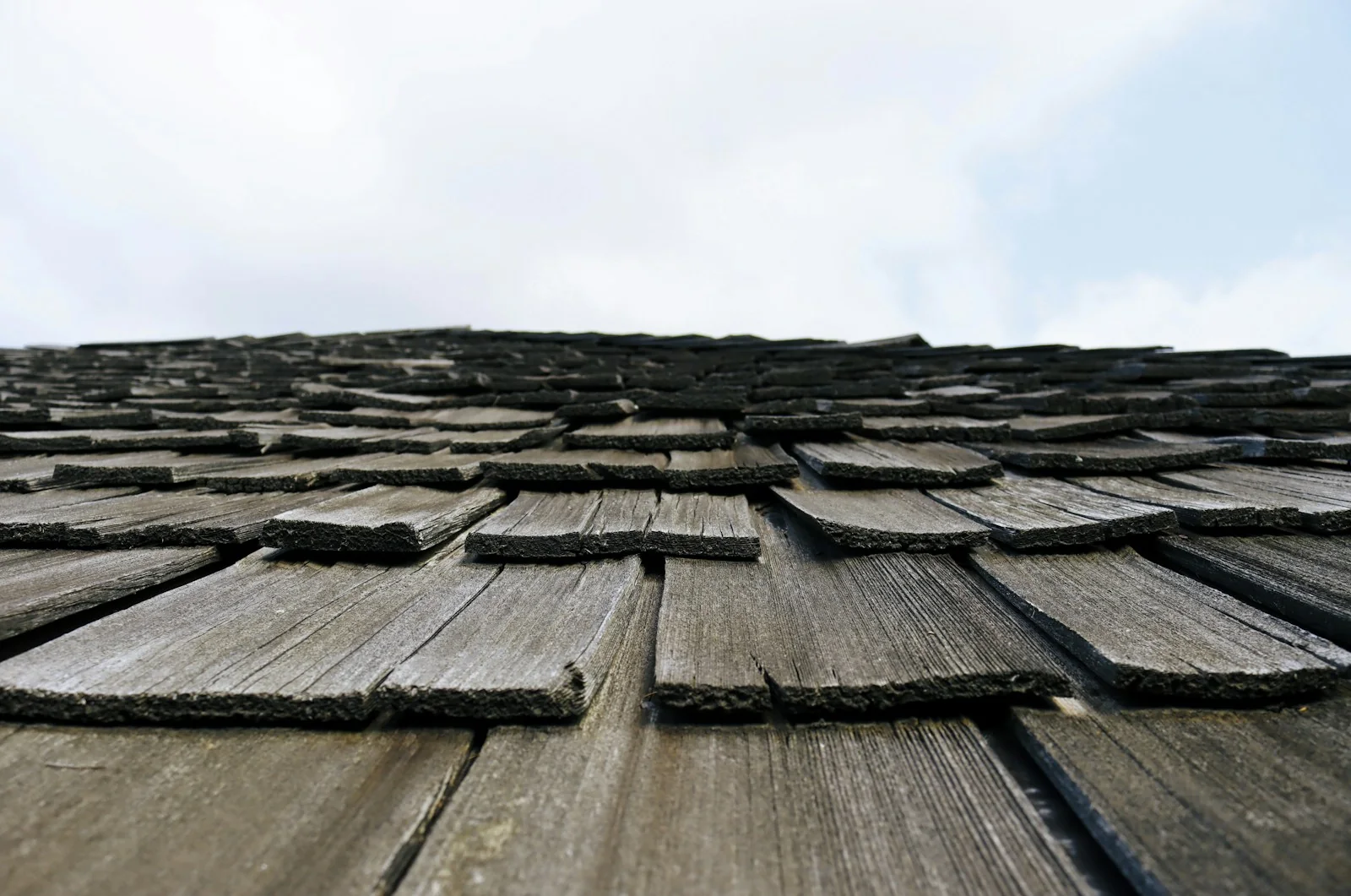
These technical references describe building-science principles, not a diagnosis at a Norwalk property. The photograph is illustrative, not a completed Roofing Pros project. The guide does not claim verified contractor certifications or guaranteed outcomes. Confirm the legal contracting business through Connecticut eLicense and obtain the state-required written contract where applicable.