
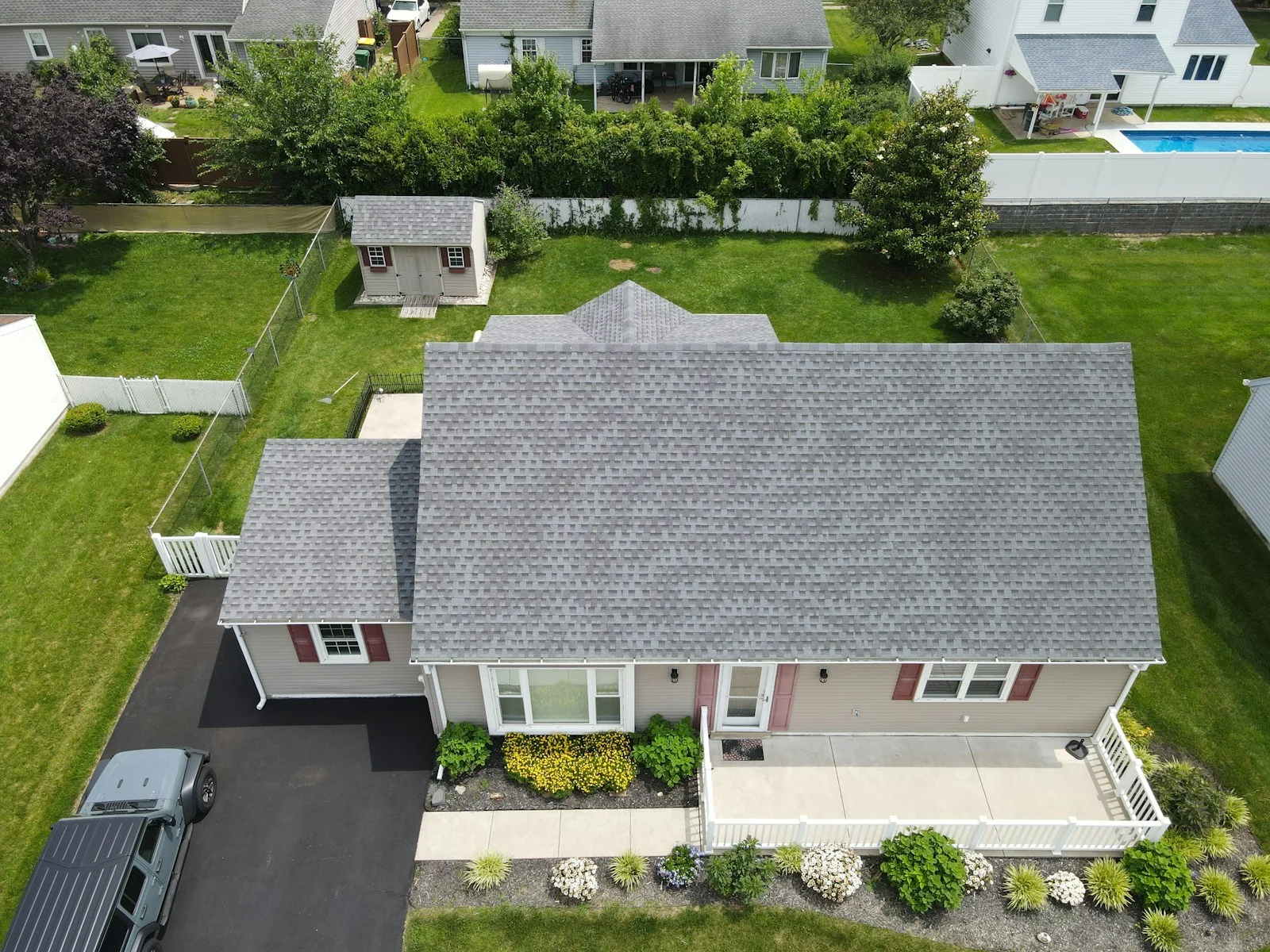
Observe exactly where the water travels
During a safe, ordinary rain, look from ground level: does water run down the *back* of the trough against the fascia, spill over the *front* lip, escape a corner seam, or emerge from the soffit? A video showing the full eave and the runoff location often resolves confusion faster than a close-up of a wet wall. Never stand beneath a damaged gutter or use a ladder during wet weather.
Backflow behind the gutter usually directs attention to the roof edge. Water overtopping the front of the gutter points more toward volume, pitch or an outlet restriction. Dripping at a joint may be a seam issue. Water coming from inside a soffit can indicate a separate upstream roof leak.
The DOE drip-edge detail illustrates why the roof edge must carry water outward beyond vulnerable fascia and sheathing. The gutter must receive that flow; a clean trough cannot repair a bad roof-to-gutter overlap.
Follow the water from the last shingle course
The roof covering should direct runoff beyond vulnerable sheathing edges and onto metal edging or the gutter apron as designed. A drip edge provides a formed path away from the fascia rather than letting surface tension pull water back toward the building. The gutter must be positioned so that this discharge lands inside the trough.
If the drip metal ends behind the rear wall of the gutter or there is a gap that encourages water to curl underneath, the gutter can remain clean and still fail. A qualified roofer or gutter installer should photograph the overlap in profile and explain the correction before proposing replacement of the entire gutter system.
Drip edge versus gutter apron: different jobs at the eave
A drip edge protects the roof edge by projecting water outward. A gutter apron is a wider style of metal flashing often used to bridge the transition between the roof edge and gutter. Exact profiles and underlayment sequencing depend on the roof system and manufacturer's instructions; there is not one detail that suits every house.
Problems arise when the materials are layered backward, installed too short or separated by later gutter replacement. The right repair may involve removing and replacing a short section of metal, adjusting the gutter height or reconstructing the edge after checking the roof deck. Pushing loose metal under shingles without respecting the water-control sequence can create a new path.
Why gutter hangers and sagging fascia matter
Fasteners can loosen, brackets bend, fascia rot or the gutter deform under sustained loads. A trough that rotates away from the eave may expose a gap even if the drip edge was originally sufficient. Sagging can also change the relative elevation of the gutter back wall and the lip of the roof metal.
Inspect the fascia condition, fastener attachment and slope together. A new downspout will not fix a gutter that has separated from structurally unsound backing. If the fascia is spongy or cracked, replacing only the visible aluminum can conceal an ongoing moisture problem.
Use front-lip overflow as a comparison case
Water shooting over the front of a full gutter can occur when leaves block an outlet, the downspout is restricted or rainfall exceeds the drainage system's temporary capacity. It may look similar to rear-wall leakage when viewed from the ground at an angle. Watch where the water first crosses the metal and whether the trough is actually full.
The separate clean-gutters-overflow guide explains drainage capacity, outlet geometry and roof runoff concentration. Keep this diagnosis focused on the roof-edge connection when the water is bypassing the gutter rather than rising within it.
Check the junction where a roof meets an exterior wall
A short roof section discharging beside a sidewall may need correctly detailed kick-out flashing to deliver water into the gutter. Without that deflector, runoff can track behind siding before reaching the eave. It may appear as a water-behind-gutter problem when the true defect begins farther uphill.
The roofer should inspect the entire roof-wall path and not only add sealant along the rear gutter lip. Building Science Education identifies kick-out flashing as a key measure for diverting water away from vulnerable wall assemblies.
Watch for staining and fascia deterioration
Recurrent dark streaks on fascia, peeling paint, swollen wood and damp soffit sheathing indicate that the area has been wetted repeatedly. Staining is evidence of exposure, not a complete assessment of structural condition. A probe or selective opening by a qualified worker may be needed to see whether repairs extend beyond the gutter hardware.
Document any indoor moisture, especially at exterior wall tops or ceiling corners. Water behind a gutter may enter the building at damaged roof-edge layers, or it may run harmlessly outside but still damage exterior finishes over time. The direction and duration of wetting determine urgency.
Why a new roof can cause a new gutter problem
Roofers may replace shingles and drip-edge metal while leaving existing gutters, and gutter installers may subsequently move the trough or brackets. Either change can alter the overlap that previously guided runoff into the gutter. A complaint that starts after one trade's work should trigger a close look at the modified interface.
Keep before-and-after photos and the scope from both trades. Ask who is responsible for coordinating metal edging, gutter placement and fascia protection. The goal is a corrected assembly, not an argument about whose product is defective.
What the repair scope should specify
A sound proposal should name the failed part: missing apron, metal terminating behind the gutter, loose hanger, damaged fascia, incorrect gutter position or a roof-wall deflector. It should state whether shingles or underlayment must be lifted, how metal laps will be restored and whether damaged wood is included.
Ask for a photo of the existing handoff and one after repair. If a gutter is re-hung, ask how the outlet pitch is preserved. If the eave itself is opened, ask how the water barrier and edge fastening will be reinstated. A low price for caulking the gap may not address water being delivered behind the metal.
Do not confuse roof runoff with irrigation or wall leaks
Rainwater from an upper roof, window sill or balcony can run down a facade before reaching the gutter line. A nearby downspout leak can also wet the fascia from the side. Inspect from above using photographs obtained safely, not by reaching over the edge.
If the water begins at a masonry joint or wall penetration, gutter work alone may accomplish little. Trace where the wet streak starts, whether it corresponds to rain events and whether the gutter interior is wet at the same time. Those observations help identify the appropriate trade.
Norwalk eave conditions to document
Wooded rooflines may accumulate leaves and twigs, while wind-exposed eaves face different loads. Neither condition explains a water-behind-gutter symptom without actual inspection. On a Norwalk house, note the roof slope, shingle overhang, gutter profile, hanging method and any previous roof or gutter replacement.
The five common residential ZIPs do not determine construction quality. What matters is the visible junction at the specific building, including whether water is directed away from walls and the foundation. Request a written estimate from a properly registered contractor when required by Connecticut law.
When to call roofing rather than only gutter cleaning
If the trough is clear and water bypasses its back edge, ask for roof-edge flashing expertise. If the gutter is full and overflowing from the front, the priority may be outlet and drainage-system evaluation. If fascia wood is soft or water enters the home, include investigation of damaged building materials.
A complete diagnosis can involve roofing and gutter work together. It should not force the homeowner to replace a sound roof merely because water takes the wrong route at the eave. Photographs of the actual overlap and a limited repair plan keep those decisions accountable.
A five-minute contractor conversation that avoids confusion
Say whether water runs between the gutter and fascia, whether it happens along the entire eave or only at one bracket, whether the trough fills during rain and whether the roof was recently replaced. Ask for an edge-profile photo and a drawing of where the discharge should land.
If the response is simply to 'seal the back,' ask why that would correct the overlap. A compatible, mechanically secure flashing and gutter connection must shed water by gravity instead of depending on surface caulk exposed to weather.
Observe the first point where water escapes
If water streams down between the gutter and fascia while the trough is nearly empty, inspect the apron and discharge position rather than booking another cleaning. If the trough fills and water crosses its front lip, the likely questions involve outlet capacity, gutter pitch or concentrated valley runoff. If water drips out of the soffit above the gutter, an upstream roof or wall leak is possible. Film the full eave from a safe ground position in normal rain so the contractor can see where the stream starts.
The separate clean gutter overflow guide focuses on volume and outlets. Keeping these failure mechanisms separate avoids paying to replace a sound gutter when a short metal overlap is the cause—or paying to reinstall flashing when the actual outlet is obstructed.
What to request in an edge-profile inspection
Ask for a side-on photograph showing the last shingle course, formed metal edging, gutter back wall, hangers and fascia condition. The roofer should point to where water leaves the roof, where it is supposed to land, and whether a gutter apron or another compatible metal detail is appropriate for the existing assembly. Where a roof slopes into a sidewall, also ask whether the kick-out flashing directs water into the trough instead of behind siding.
Repair decisions should distinguish misalignment from weakened wood. A gutter can be re-hung against sound fascia; soft fascia or damaged sheathing calls for more inspection. If a roofing and gutter crew both touched the eave recently, compare the prior and current configuration. Sealant along the back edge is not a substitute for correctly layered flashing and reliable mechanical support.
Match the evidence to the next action
| What you observe | What it may indicate | Reasonable next step |
|---|---|---|
| Water behind gutter, trough nearly empty | Roof-edge apron/drip-edge gap | Check metal discharge path |
| Gutter tilts away from fascia | Loose hangers or weak fascia | Inspect support and alignment |
| Water pours over front lip | Outlet capacity, blockage or pitch | Evaluate drainage, not apron only |
| Leak begins at roof-wall intersection | Missing or failed kick-out flashing | Trace wall-to-gutter flow |
| New leaks after gutter replacement | Gutter/back-lip relationship changed | Compare former and new overlap |
Use these observations to guide a qualified inspection, not to diagnose roof failure from a photo alone.
Questions Norwalk homeowners ask
Will cleaning fix water running behind the gutter?
Not if the trough is being bypassed. Cleaning helps blockages; the drip-edge-to-gutter handoff needs separate assessment.
Is a gutter apron the same as drip edge?
They are related edge-flashing profiles, but gutter aprons may bridge farther toward the gutter. The suitable detail depends on the roof and gutter assembly.
Can water behind a gutter damage fascia?
Yes. Repeated wetting can damage paint and wood and can affect soffit materials or nearby wall assemblies.
Should a gutter be sealed to the fascia?
Sealant is not a substitute for a correctly aligned drainage detail and sound fasteners. Ask how runoff is directed into the gutter.
Why did this start after a new roof?
Changes to drip metal, shingle overhang or gutter positioning can alter the water path. Inspect the modified junction rather than guessing.
Technical references and editorial limits
This educational guide summarizes published building-science and roofing guidance; it is not an account of a Roofing Pros job or a substitute for a site inspection. Source documents describe general mechanisms and may use details that require adaptation to the exact roof system. No unverified business credentials, project photographs, warranties or insurance outcomes are asserted.
- DOE Building Science: drip edge at eaves and rakes
- DOE Building Science: kick-out flashing
- DOE Building Science: stormwater gutters and downspouts
- Building Science Corporation: rain control and drip edges
For paid home-improvement work, confirm the legal contracting business, current Connecticut Home Improvement Contractor registration where required, and the written contract terms. See Connecticut eLicense and DCP consumer guidance.